

Posts

Shaping the future of family business

Shaping the future of family business

[ad_1]

My Career runs in Women on Wednesday (WoW!). This week we feature Niamh Galvin from NBM

Name: Niamh Galvin

Age: 31

Lives: Douglas, Cork.

Job title: Business Development & Marketing Manager, National Business Machines (NBM)

Salary bracket: €60,000+

Education background: Scoil Mhuire Secondary School graduate, 2009. Then graduated from Commerce in UCC in 2013, followed by a master’s degree in Marketing from Smurfit College, Dublin, in 2014.

Hobbies: Foodie, health and fitness, wine lover and discovering new places.

Describe your job in five words: Driving the NBM brand and business strategy.

Describe yourself in five words: Positive-thinker and results-driven.

Personality needed for this kind of work? A creative thinker with a positive mindset to influence and collaborate with people.

How long are you doing this job? I have been in my current role with National Business Machines (NBM) for eight months after moving back from Australia where my partner and I were living for the past two years.

How did you get this job? I graduated from Commerce at UCC, followed by my Masters in Smurfit College after that in 2014. I quickly developed a passion for brand management and made the move to Dublin for my first role with the Kerry Foods Graduate Programme in Dublin, working across Sales, Marketing and Category management with Irish brands.

Heineken Ireland then came calling and I took up a role with the Heineken brand and sponsorship management team, where I gained invaluable experience, and had plenty of fun along the way, over my four years working on Ireland biggest lager brand.

In 2019, myself and my partner decided to pack up and move ourselves to Australia to experience living abroad. I took on a Senior Marketing Manager role with Heineken Australia, working with international brands such as Tiger Beer and Orchard Thieves Cider.

As my heart always belonged in Ireland, and Cork in particular, we experienced it all for two years and arrived home last year back to Cork. I am absolutely delighted to be back and joining the family business after nearly 10 years’ experience within the marketing industry. It has been a great journey so far, I am thoroughly enjoying getting to know a different industry and bringing my experience to date into NBM to drive the brand and strategy to the next level over the coming months and years.

Do you need particular qualifications or experience? Within my role specifically, it is quite diverse and I work with many different people within the business. It is a commercially focused role, therefore my business education background has helped as well as my marketing experience, especially when looking at the digital marketing and digital transformation area for National Business Machines. I would say commercial and marketing experience is more valuable than any certain qualification.

Describe a day at work: My role differs day to day, and hour to hour, which is what I love about it. I am involved in all aspects of the business to ensure a deep understanding of the end-to-end business, to shape and drive the NBM strategy forward.

My days can look like anything, from scheduling digital marketing campaigns to creating sales enablement tools and presentations for the sales team. 

My main priority is to ensure the sales team are equipped with the right tools to enable them to effectively sell to our customers and meet their needs. I manage all marketing activities from events, sales brochures, website development, through to our internal sales CRM system.

As part of the NBM management team, I am also focused on shaping the NBM business and commercial strategy for the future, to ensure that we are delivering the right products and solutions for our customers. I am thoroughly enjoying the variety within the role and am learning more every day. I am looking forward to the coming years with NBM to see how I can help to shape the future. We are really lucky to have maintained business and grown our marketing share here at NBM throughout the past 18 months thanks so our strong customer base and resilient team.

How many hours do you work a week? Approximately 45 hours, depending on the week. NBM encourages a strong work life balance and flexible working, especially in today’s Covid times.

What do you wear to work? Business casual.

Is your industry male or female dominated? The industry is traditionally male dominated, especially within the sales environment. However, I think this is becoming less so across the market, which is great to see.

NBM in particular have a focus on ensuring an equal gender balance within the company and the sales team, with three new female Senior Account Managers joining the business in the past year…

[ad_2]

Source link
Syria, Airpower, and the Future of Great-Power War

Syria, Airpower, and the Future of Great-Power War

[ad_1]

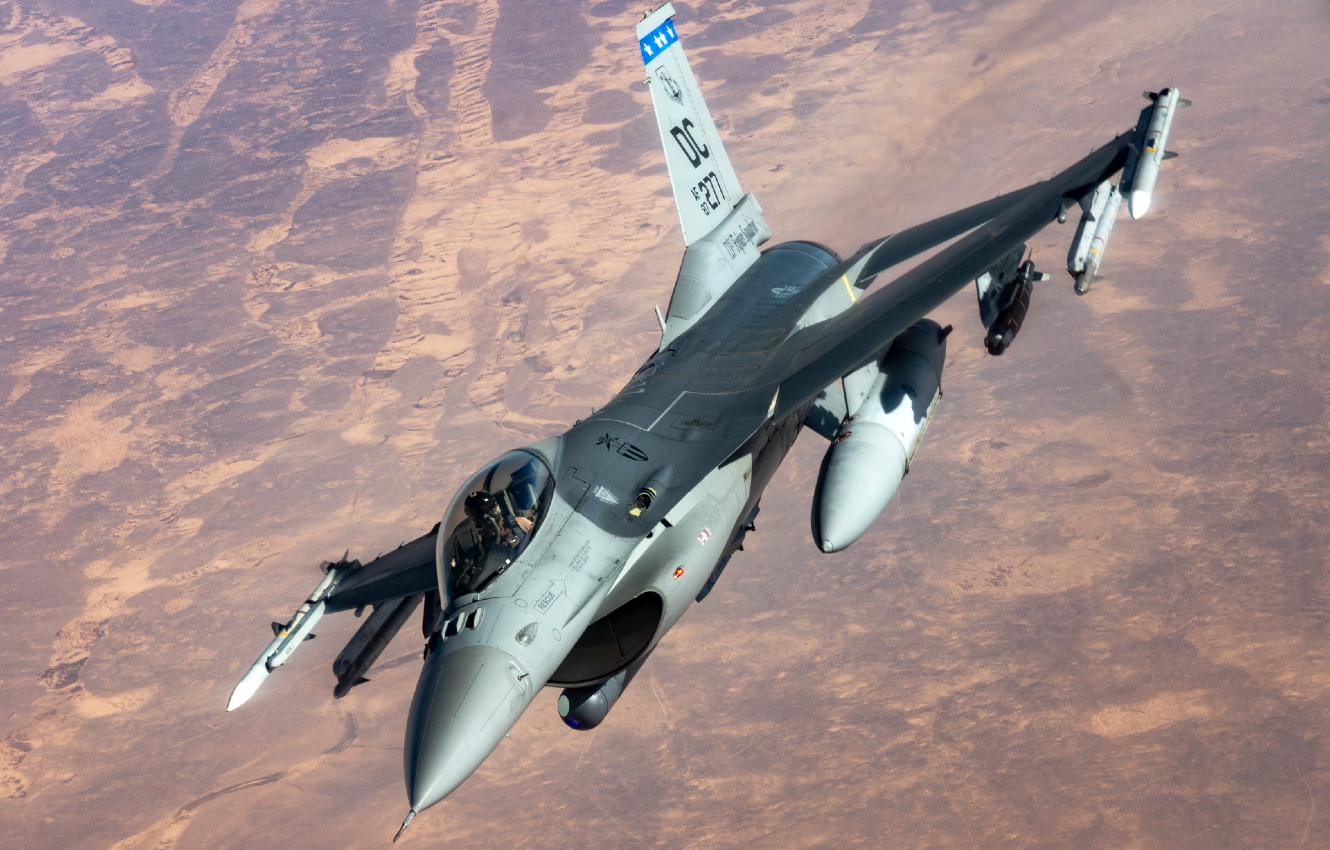
During the war in Syria, the U.S. Air Force participated in operations it rarely trained for. Russian fighter aircraft regularly flew sorties across the Euphrates River toward U.S. positions, even though the two countries were not direct antagonists in the conflict. In response, U.S. fighters would — during times of tension — intercept the incoming jets and engage in maneuvers to prevent them from dropping bombs near American and partner positions on the ground. Despite a deconfliction mechanism between Moscow and Washington to manage air operations, this type of incident has been a fairly common occurrence in Syrian airspace from 2016 to the present.

While the risk of uncontrolled escalation between the two powers remained low throughout most of the conflict, this was the first time that Western and Russian pilots have routinely flown so close to one another in combat since the 1973 Arab-Israeli war in  Sinai. The air war in Syria is a great example of what great-power competition may actually look like in scenarios short of officially declared combat: urbanized and chaotic. Russian aerial operations, including how Moscow sought to shape broader opinion about the conflict, highlight how great powers may choose to use force in peripheral conflicts that challenge American interests, but not the U.S. conventional military directly.


As the U.S. Air Force prepares for conflict with Russia and China, its interactions with Russian forces in Syria offer valuable lessons about the “urbanization” of aerial combat and its operational and tactical nuances. First, great-power conflict may not result in direct combat, but instead involve each country fighting for strategic leverage in third countries using a mixture of airpower and elite ground forces. Second, powers hostile to the United States may try to complicate U.S. action in ways that fall below the threshold of officially declared war, but which skirt the line of hostile action and complicate how U.S. forces may use force in dense and complicated combat environments. Third, U.S. Air Force training scenarios do not fully account for the complexity of an air war resembling the American experience in Syria. As a result, assumptions about how adversaries may challenge U.S. interests with airpower should be updated beyond linear notions of Joint Forcible Entry, even while training for a high-end fight continues to ensure that U.S. pilots retain critical advantages over adversary nations.

The Challenge in Syria: Non-Hostile Adversaries

Syria was often downplayed as a “permissive” environment for air operations because friendly forces were not kinetically engaged by enemy air defenses. Nevertheless, the Air Force faced an almost impossibly complex situation operating in Syrian airspace. U.S. aircraft were flying in proximity to Russian jets, often in support of different ground actors, but with rules of engagement that did not classify the Russian Aerospace Forces as a hostile adversary. These interactions were also taking place within the “no escape zone” of both Russian air-to-air weapons and the relatively intact Syrian integrated air defenses. In short, the delineation between permissive and non-permissive was purely academic.

The United States and its coalition partners also chose not to degrade or disable the Syrian regime’s integrated air defense system, which remained potent throughout the war and used to fire at Israeli aircraft, but rarely used to target American or coalition pilots. To make matters even more complicated, the Russians improved Syrian air defenses with the deployment of the S-300 and S-400, raising concerns that Russian technicians and operators may be present at these sites to help operate them. The Soviet Union used this tactic during the Cold War to deter the targeting of air defense sites in third countries mired in conflict.

To manage this air environment, the United States and Russia relied upon a deconfliction mechanism to prevent midair collisions and inadvertent escalation. The ostensible barrier in Syria’s northeast separating the two forces was the Euphrates River, which at its widest point is around 1,000 feet wide. The aircraft the United States and Russia deployed to Syria can cover 1 mile in about seven seconds at normal cruising altitude and airspeed, and air-to-ground weapon release zones were often several miles from a target. A large, easy to identify object makes sense to deconflict two air forces because a river never moves and can be seen from miles away, so pilots should have little trouble adhering to territorial boundaries to help minimize risk of unintended escalation and a midair collision. However, the deconfliction mechanism did not preclude either side from crossing the river. Instead, it asked each air force to provide pre-notification for planned flights that would cross the body of water. At times, Russia would simply choose not to provide that information, or cross the river…

[ad_2]

Source link