Texas News Today

Colorado’s family trapped in Afghanistan safely escapes the country

[ad_1]

NS Colorado Fox News reports that families stranded in Afghanistan after their return flights were canceled have successfully left the war-torn country that was hijacked by the Taliban.

A woman and her two daughters visiting relatives in Afghanistan during the Taliban-led turmoil were able to escape with the help of retired Special Forces Colonel Patrick Allen, he said Wednesday. Confirmed with Fox News. The trio, all US citizens, will board a plane to Qatar and return to the United States within hours or days.

“He’s a little rattling,” Allen said of the woman’s husband. “He’s okay. He’s not as worried about his wife and children as he was a day ago.”

Colorado family stuck in Afghanistan after flight home canceled

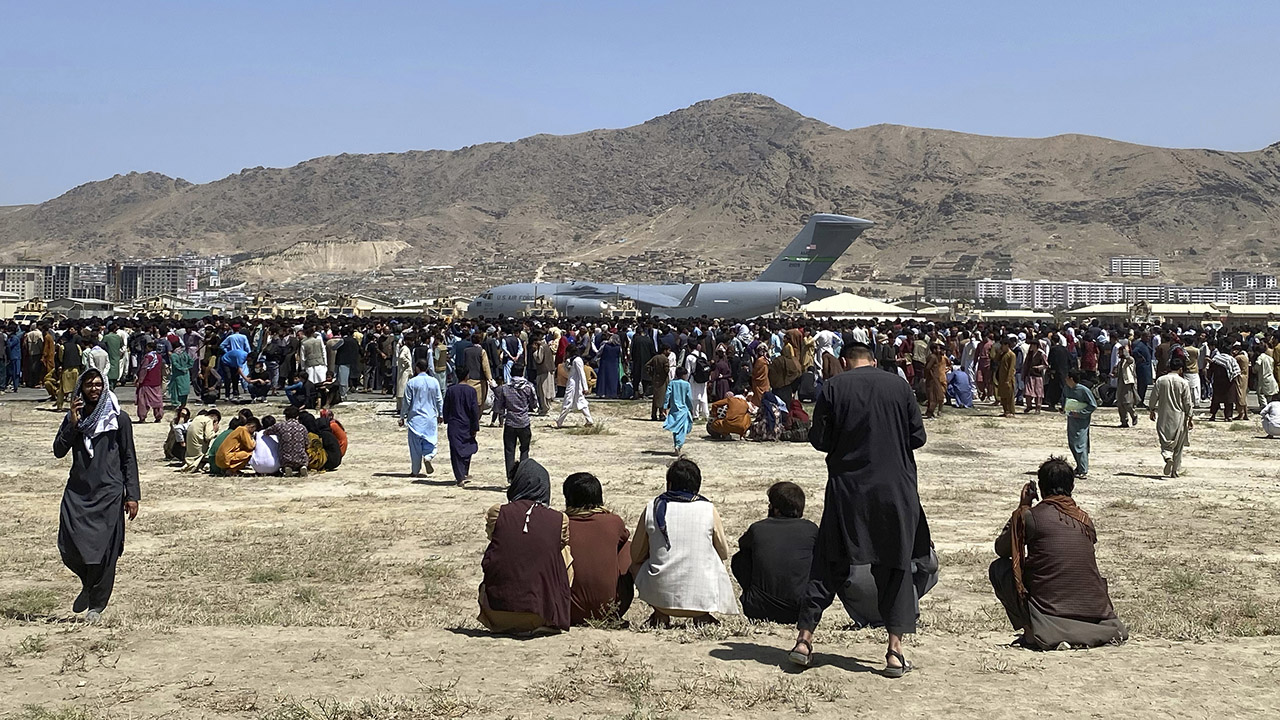
On Monday, hundreds of people will meet near the US Air Force C-17 transport plane around Kabul’s international airport in Afghanistan.
(AP)

Also from Colorado, Allen enlisted for the help of a woman’s husband and child’s father, whom she met while working in the US Army Special Forces.

The woman and her two daughters were to return home on August 5, but were delayed because one of the girls collapsed due to appendicitis and was hospitalized. My daughters are 2 and 6 years old.

When the Taliban moved to Afghanistan, his family bought a plane ticket home through Turkish Airlines on Sunday, but the flight was cancelled.

Click here to get the Fox News app

“My wife and daughters are currently hiding in Kabul’s house. A man who wanted to remain anonymous told FOX31 earlier.” I think it’s a mess. There are many lives at risk. “

Michael Hollan of Fox News contributed to this report.

Colorado’s family trapped in Afghanistan safely escapes the country

Source link Colorado’s family trapped in Afghanistan safely escapes the country

[ad_2]

Source link

Democratic congressman addresses fellow veterans: I'm 'too honest' to say Afghanistan 'sacrifice was worth it'

Democratic congressman addresses fellow veterans: I’m ‘too honest’ to say Afghanistan ‘sacrifice was worth it’

[ad_1]

U.S. veterans who fought in Afghanistan are questioning what their service in Afghanistan meant now that the Taliban has retaken control of nearly the entire country 20 years later, The Wall Street Journal reports

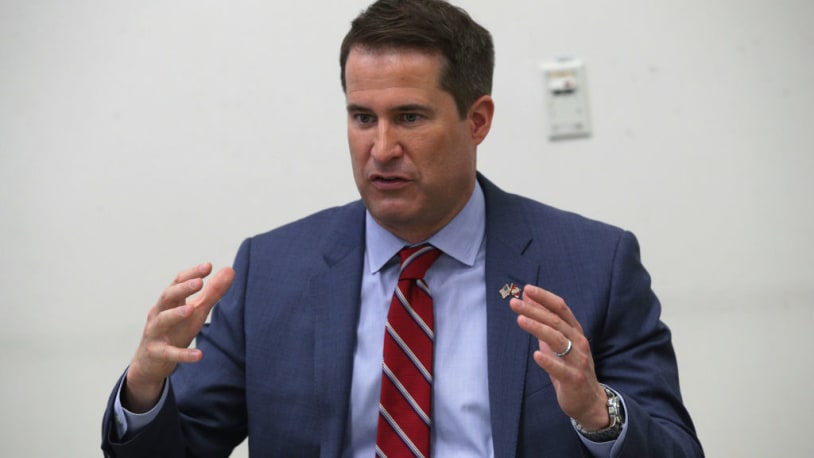
Rep. Seth Moulton (D-Mass.), a Marine veteran who served in Iraq, doesn’t have a straight answer for them, but in a statement Sunday night he addressed his fellow veterans and their families, saying he is “too honest to stand here today and try to convince you that your sacrifice was worth it.” He said some people “may find solace” in the fact that millions of Afghans, particularly girls and women, received “two decades of a taste of freedom,” but others “will forever ask that haunting question I heard too often from my own Marines in Iraq: ‘Why are we here?'” 

The best answer Moulton said he’s always been able to give is simply: “So nobody has to be here in our place.” Read more veteran reactions to the Afghanistan withdrawal at The Wall Street Journal

[ad_2]

Source link

Why the Afghan Military Collapsed So Quickly

Why the Afghan Military Collapsed So Quickly

[ad_1]

KANDAHAR, Afghanistan — The surrenders seem to be happening as fast as the Taliban can travel.

In the past several days, the Afghan security forces have collapsed in more than 15 cities under the pressure of a Taliban advance that began in May. On Friday, officials confirmed that those included two of the country’s most important provincial capitals: Kandahar and Herat.

The swift offensive has resulted in mass surrenders, captured helicopters and millions of dollars of American-supplied equipment paraded by the Taliban on grainy cellphone videos. In some cities, heavy fighting had been underway for weeks on their outskirts, but the Taliban ultimately overtook their defensive lines and then walked in with little or no resistance.

This implosion comes despite the United States having poured more than $83 billion in weapons, equipment and training into the country’s security forces over two decades.

Building the Afghan security apparatus was one of the key parts of the Obama administration’s strategy as it sought to find a way to hand over security and leave nearly a decade ago. These efforts produced an army modeled in the image of the United States’ military, an Afghan institution that was supposed to outlast the American war.

But it will likely be gone before the United States is.

While the future of Afghanistan seems more and more uncertain, one thing is becoming exceedingly clear: The United States’ 20-year endeavor to rebuild Afghanistan’s military into a robust and independent fighting force has failed, and that failure is now playing out in real time as the country slips into Taliban control.

How the Afghan military came to disintegrate first became apparent not last week but months ago in an accumulation of losses that started even before President Biden’s announcement that the United States would withdraw by Sept. 11.

It began with individual outposts in rural areas where starving and ammunition-depleted soldiers and police units were surrounded by Taliban fighters and promised safe passage if they surrendered and left behind their equipment, slowly giving the insurgents more and more control of roads, then entire districts. As positions collapsed, the complaint was almost always the same: There was no air support or they had run out of supplies and food.

But even before that, the systemic weaknesses of the Afghan security forces — which on paper numbered somewhere around 300,000 people, but in recent days have totaled around just one-sixth of that, according to U.S. officials — were apparent. These shortfalls can be traced to numerous issues that sprung from the West’s insistence on building a fully modern military with all the logistical and supply complexities one requires, and which has proved unsustainable without the United States and its NATO allies.

Soldiers and policemen have expressed ever-deeper resentment of the Afghan leadership. Officials often turned a blind eye to what was happening, knowing full well that the Afghan forces’ real manpower count was far lower than what was on the books, skewed by corruption and secrecy that they quietly accepted.

And when the Taliban started building momentum after the United States’ announcement of withdrawal, it only increased the belief that fighting in the security forces — fighting for President Ashraf Ghani’s government — wasn’t worth dying for. In interview after interview, soldiers and police officers described moments of despair and feelings of abandonment.

On one frontline in the southern Afghan city of Kandahar last week, the Afghan security forces’ seeming inability to fend off the Taliban’s devastating offensive came down to potatoes.

After weeks of fighting, one cardboard box full of slimy potatoes was supposed to pass as a police unit’s daily rations. They hadn’t received anything other than spuds in various forms in several days, and their hunger and fatigue were wearing them down.

“These French fries are not going to hold these front lines!” a police officer yelled, disgusted by the lack of support they were receiving in the country’s second-largest city.

By Thursday, this front line collapsed, and Kandahar was in Taliban control by Friday morning.

Afghan troops were then consolidated to defend Afghanistan’s 34 provincial capitals in recent weeks as the Taliban pivoted from attacking rural areas to targeting cities. But that strategy proved futile as the insurgent fighters overran city after city, capturing around half of Afghanistan’s provincial capitals in a week, and encircling Kabul.

“They’re just trying to finish us off,” said Abdulhai, 45, a police chief who was holding Kandahar’s northern front line last week.

The Afghan security forces have suffered well over 60,000 deaths since 2001. But Abdulhai was not talking about the Taliban, but rather his own government, which he believed was so inept that it had to be part of a broader plan to cede territory to the Taliban.

The months of…

[ad_2]

Source link

The Globe and Mail

Canada to send special forces to Afghanistan to evacuate Kabul embassy amid Taliban advance, joining U.S., U.K. deployments

[ad_1]

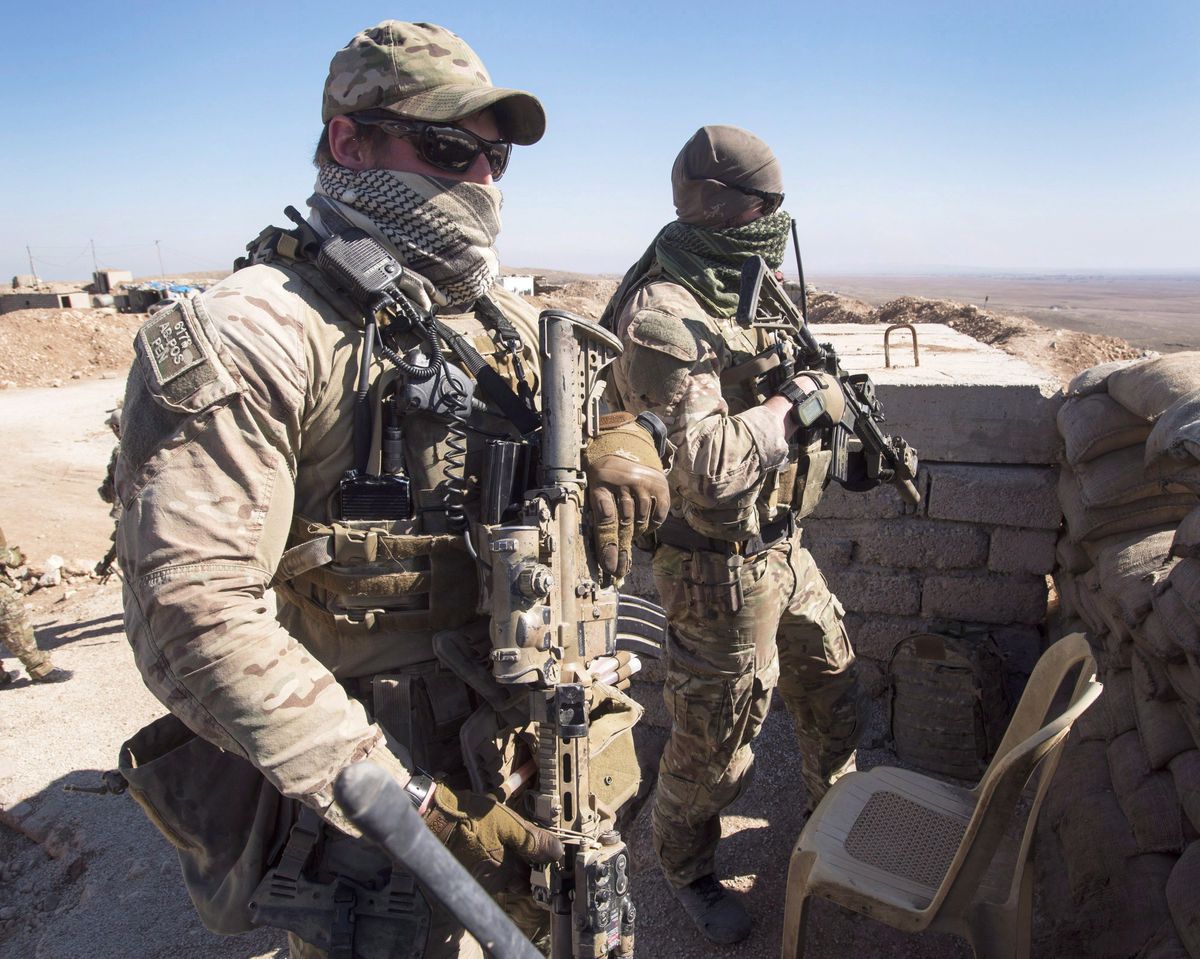
Canadian special forces look over a Peshmerga observation post on Feb. 20, 2017 in northern Iraq.

Ryan Remiorz/The Canadian Press

Canadian special forces will deploy to Afghanistan where Canadian embassy staff in Kabul will be evacuated before closing, a source familiar with the plan told The Associated Press.

The official, who was not authorized to talk publicly about the matter and spoke on condition of anonymity, did not say how many special forces would be sent.

Just weeks before the U.S. is scheduled to end its war in Afghanistan, the Biden administration is also rushing 3,000 fresh troops to the Kabul airport to help with a partial evacuation of the U.S. Embassy.

Story continues below advertisement

The moves highlight the stunning speed of a Taliban takeover of much of the country, including their capture on Thursday of Kandahar, the second-largest city and the birthplace of the Taliban movement.

Britain also said Thursday that it will send around 600 troops to Afghanistan to help U.K. nationals leave the country amid growing concerns about the security situation. And Danish lawmakers have agreed to evacuate 45 Afghan citizens who worked for Denmark’s government in Afghanistan and to offer them residency in the European country for two years.

Former Afghan driver happy to be in Canada, but fears for those left behind

Exiting Afghanistan will go down in history as Joe Biden’s big blunder

Some 40,000 Canadian troops were deployed in Afghanistan over 13 years as part of the NATO mission before pulling out in 2014.

The first planeload of Afghan refugees who supported the Canadian military mission in Afghanistan arrived in Canada earlier this month. The Canadian government last month announced a special program to urgently resettle Afghans deemed to have been “integral” to the Canadian Armed Forces’ mission, including interpreters, cooks, drivers, cleaners, construction workers, security guards and embassy staff, as well as members of their families.

Retired corporal Tim Laidler, who has been one of many Canadian veterans working to help former interpreters and their families come to Canada, expressed concern Thursday about the news the embassy may be closed.

Laidler, who now heads the Institute for Veterans Education and Transition at the University of British Columbia, said he is aware of hundreds of Afghans trapped in Kabul who worked with Canada and have applied for help and are desperate to escape the Taliban.

Laidler expressed concern that Canada would “cut and run” from Afghanistan, leaving the interpreters and their families behind.

Story continues below advertisement

“There needs to be reassurance from IRCC (Immigration, Refugees and Citizenship Canada) that they will continue to process the paperwork,” Laidler told The Canadian Press.

A Canadian special forces soldier, left, speaks with Peshmerga Captain Omar Mohammed Dhyab, second from left, and other fighters at an observation post on Feb. 20, 2017 in northern Iraq.

Ryan Remiorz/The Canadian Press

Immigration Minister Marco Mendicino’s office did not immediately respond to questions on Thursday evening.

Ciara Trudeau, a spokeswoman for Global Affairs Canada, said that Canada is monitoring the evolving situation in Afghanistan on a continuous basis but for security reasons can’t comment on specific operational matters of its missions abroad.

“Minister (Marc) Garneau is in close co-ordination with our allies and with our ambassador to Afghanistan,” she said in an e-mail late Thursday.

“Canada continues to work with our international partners on contingency planning, including for the ongoing work on the implementation of the Special Immigration Measures program.

“The security of the Canadian Embassy and the safety of our personnel in Kabul is our top priority.”

Story continues below advertisement

The U.S. State Department said in a release that U.S. Secretary of State Antony J. Blinken spoke separately Thursday with Garneau, the German foreign minister and NATO Secretary General Stoltenberg to discuss the United States’ plans to reduce its civilian footprint in Kabul in light of the evolving security situation.

The State Department said in a readout of the discussions that Blinken emphasized that the United States remains committed to maintaining a strong diplomatic and security relationship with the Government of Afghanistan and working with allies.

“In each call, Secretary Blinken and his counterpart exchanged views on the security environment in Afghanistan, the immediate urgency of curbing violence, and ongoing diplomatic efforts,” said the readout. “Secretary Blinken affirmed that the United States remained committed to supporting a political solution to the conflict.”

The Canadian government has said more than 800 Afghans who supported the mission have been resettled in Canada over the past decade but acknowledges that many more remain in…

[ad_2]

Source link

American and Afghan soldiers lower a U.S. flag in in Helmand province, southern Afghanistan, on May 2. Troops from Fort Bragg are deploying to support the evacuation plan for U.S. embassy personnel in Kabul.

The U.S. should learn from its own playbook to take down the Taliban

[ad_1]

James S. Robbins

President Biden says that there is no valid comparison between the current crisis in Afghanistan and the 1975 collapse of South Vietnam following the pullout of U.S. ground forces. “None whatsoever. Zero,” he told reporters. “It is not at all comparable.” 

However, the situation on the ground looks uncomfortably more familiar by the day. Taliban forces are on the march, overrunning nine provincial capitals in the last week.  Refugees are crowding the streets in the capital of Kabul, and the Biden administration has expanded the number eligible for permanent resettlement in the United States.

Learning military tactics from 1972

According to a new US military assessment of the Afghan situation, “everything is moving in the wrong direction.” Comparisons to the Vietnam War’s endgame are apt, but defeat is not inevitable if US policymakers learn the right lessons. They should focus less on 1975 and more on 1972.

In the spring of 1972, with the bulk of US ground forces out of South Vietnam and peace talks ongoing, North Vietnam launched a massive surprise attack to decide the outcome of the war in one stroke. The “Easter Offensive,”as it was dubbed, was a massive conventional invasionon a scale not seen since Tet in 1968

American and Afghan soldiers lower a U.S. flag in in Helmand province, southern Afghanistan, on May 2. Troops from Fort Bragg are deploying to support the evacuation plan for U.S. embassy personnel in Kabul.

South Vietnamese forces at first buckled under the ferocity of the assault, but President Nixon responded by launching Operation Linebacker, an intensive, coordinated air campaign that destroyed communist forces, disrupted their supply and communications lines, and gave South Vietnamese troops the opportunity to rally and push back the invaders. 

This successful defense of South Vietnam demonstrated American resolve and was instrumental in securing the 1973 Paris Peace Accords. The dark days for South Vietnam came two years after the peace deal. Nixon had resigned, Democrats in Congress defunded the military support we had promised Saigon, and in April 1975 the North replayed its Easter Offensive script. This time it worked. Saigon fell, Americans bugged out, and the war was over. 

[ad_2]

Source link

Taliban Sweep Across Afghanistan's South, Taking At Least Three More Cities : NPR

Taliban Sweep Across Afghanistan’s South, Taking At Least Three More Cities : NPR

[ad_1]

Taliban fighters patrol inside the city of Ghazni, southwest of Kabul, Afghanistan, on Thursday. The Taliban captured the provincial capital near Kabul on Thursday, the 10th the insurgents have taken over a weeklong blitz across Afghanistan as the U.S. and NATO prepare to withdraw entirely from the country after decades of war.

Gulabuddin Amiri/AP


hide caption

toggle caption

Gulabuddin Amiri/AP


Taliban fighters patrol inside the city of Ghazni, southwest of Kabul, Afghanistan, on Thursday. The Taliban captured the provincial capital near Kabul on Thursday, the 10th the insurgents have taken over a weeklong blitz across Afghanistan as the U.S. and NATO prepare to withdraw entirely from the country after decades of war.

Gulabuddin Amiri/AP

KABUL, Afghanistan — The Taliban captured another three provincial capitals in southern Afghanistan on Friday, including in Helmand, the scene of some of the heaviest fighting in the past two decades, as the insurgents press a lightning offensive that is gradually encircling the capital, Kabul.

The loss of Helmand’s provincial capital comes after years of toil and blood spilled by American, British and allied NATO forces. Hundreds of foreign troops were killed there over the course of the nearly two-decade war.

The insurgents have taken more than a dozen provincial capitals in recent days and now control more than two-thirds of the country just weeks before the U.S. plans to withdraw its last troops.

Attaullah Afghan, the head of the provincial council in Helmand, says that Taliban captured the provincial capital of Lashkar Gah following heavy fighting and raised their white flag over governmental installations. He says that three national army bases outside of Lashkar Gah remain under control of the government.

Atta Jan Haqbayan, the provincial council chief in Zabul province, said the local capital of Qalat fell to the Taliban and that officials are in a nearby army camp preparing to leave.

Two lawmakers from Afghanistan’s southern Uruzgan province said local officials have surrendered the provincial capital, Tirin Kot, to the rapidly advancing Taliban. Bismillah Jan Mohammad and Qudratullah Rahimi confirmed the surrender Friday. Mohammad says the governor is en route to the airport to depart for Kabul.

The latest advances came hours after the insurgents captured the country’s second and third largest cities in a lightning advance. The seizures of Kandahar and Herat mark the biggest prizes yet for the Taliban.

While Kabul isn’t directly under threat yet, the losses and the battles elsewhere further tighten the grip of a resurgent Taliban, who are estimated to now hold over two-thirds of the country and continue to press their offensive.

With security rapidly deteriorating, the United States planned to send in 3,000 troops to help evacuate some personnel from the U.S. Embassy in Kabul. Separately, Britain said about 600 troops would be deployed on a short-term basis to support British nationals leaving the country, and Canada is sending special forces to help evacuate its embassy.

Thousands of Afghans have fled their homes amid fears the Taliban will again impose a brutal, repressive government, all but eliminating women’s rights and conducting public executions.

Peace talks in Qatar remain stalled, though diplomats are still meeting, as the U.S., European and Asian nations warned that any government established by force would be rejected.

“We demand an immediate end to attacks against cities, urge a political settlement, and warn that a government imposed by force will be a pariah state,” said Zalmay Khalilzad, the U.S. envoy to the talks.

Fazel Haq Ehsan, chief of the provincial council in the western Ghor province, said Friday that the Taliban had entered Feroz Koh, the provincial capital, and that there was fighting inside the city. The Taliban meanwhile claimed to have captured Qala-e Naw, capital of the western Badghis province. There was no official confirmation.

The Taliban are also on the move in Logar province, just south of Kabul, where they claim to have seized the police headquarters in the provincial capital of Puli-e Alim as well as a nearby prison. The city is some 80 kilometers (50 miles) south of Kabul.

The latest U.S. military intelligence assessment suggests Kabul could come under insurgent pressure within 30 days and…

[ad_2]

Source link

staff sgt nick jones

MARSOC Marine to receive Navy Cross for rescue during ISIS gunfight in Iraq

[ad_1]

An elite Marine Raider will be awarded the Navy Cross later this month for repeatedly exposing himself to heavy enemy fire last year while trying to rescue several wounded teammates during a six-hour gun battle with ISIS militants in Iraq.

Staff Sgt. Nicholas J. Jones, 29, was one of more than a dozen special operations Marines with the 2nd Marine Raider Battalion who were accompanying Iraqi security forces attempting to “clear enemy cave bunkers” in the mountains of Northern Iraq on March 8, 2020, when his team leader, team chief, and a French special operator were wounded by an initial volley of heavy gunfire from “multiple barricaded” fighters, according to the citation for Jones’ Navy Cross award, which is second only to the Medal of Honor and recognizes “extraordinary heroism in combat.” 

Marine Commandant Gen. David Berger will present the award to Jones on August 26 at Camp Lejeune, North Carolina.

The valor award stems from an early morning operation to clear militants near the town of Makhmur in the country’s Kurdistan region. Just after 7 a.m. local time, warplanes pounded positions in an ISIS stronghold in the rugged Qarachogh mountains before commandoes rappelled from helicopters and quickly found themselves in a ”brutal gun battle” against an estimated 15 to 30 fighters in a “well-defended cave complex,” according to The New York Times and other media reports. The insurgent group put “considerable effort” into building “vast rural tunnel networks” in the mountains after the fall of its self-proclaimed caliphate in March 2019, according to the Combating Terrorism Center at West Point.

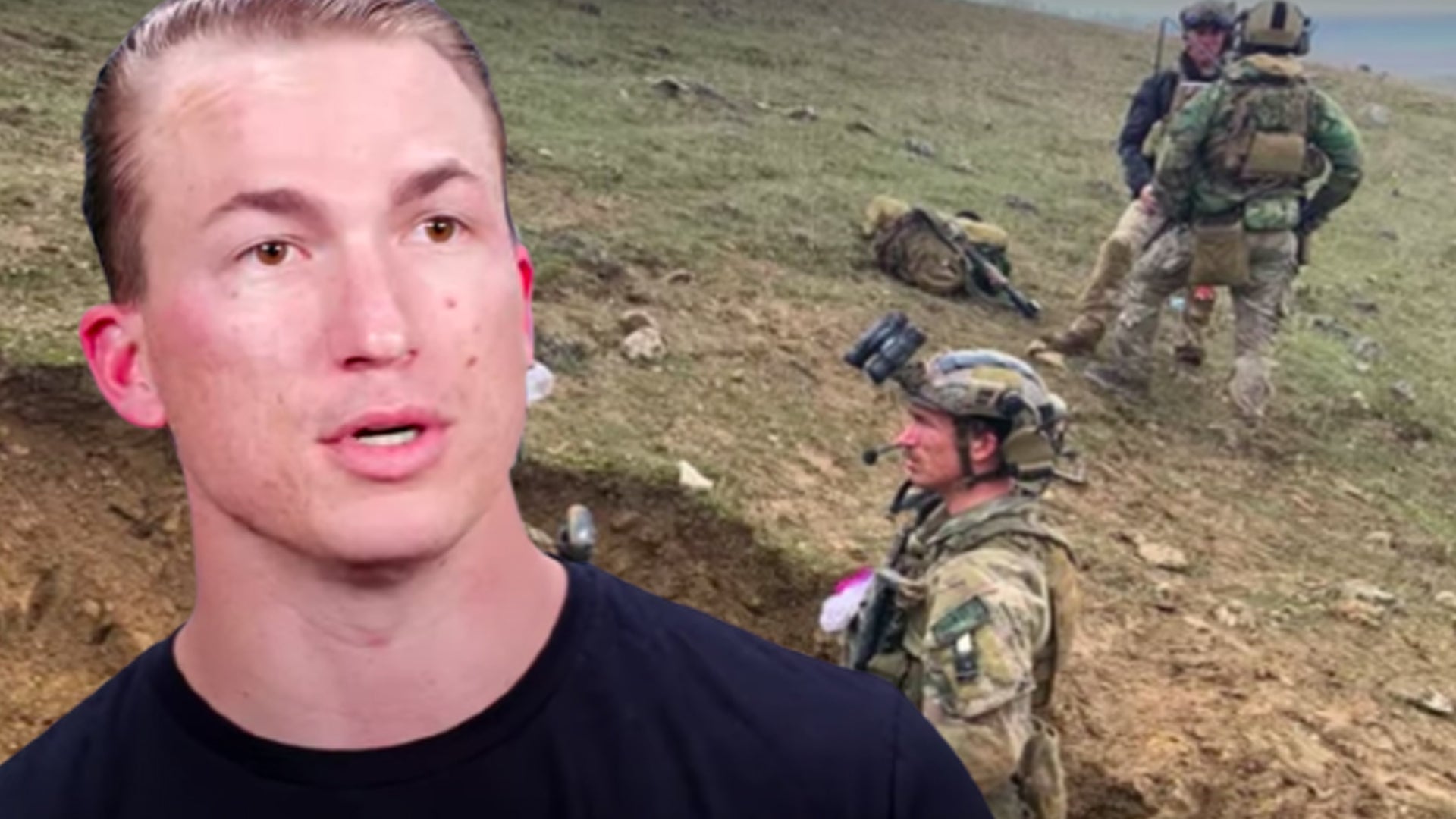
“We were tasked with doing a cave clearance in Northern Iraq,” Jones said in a video recalling the incident. “Hell just opens up behind me. Chaos. And then, the next second, there’s an eagle down,” meaning an American special operator was wounded.

This hero special ops Marine ran through gunfire to save wounded teammates in Iraq
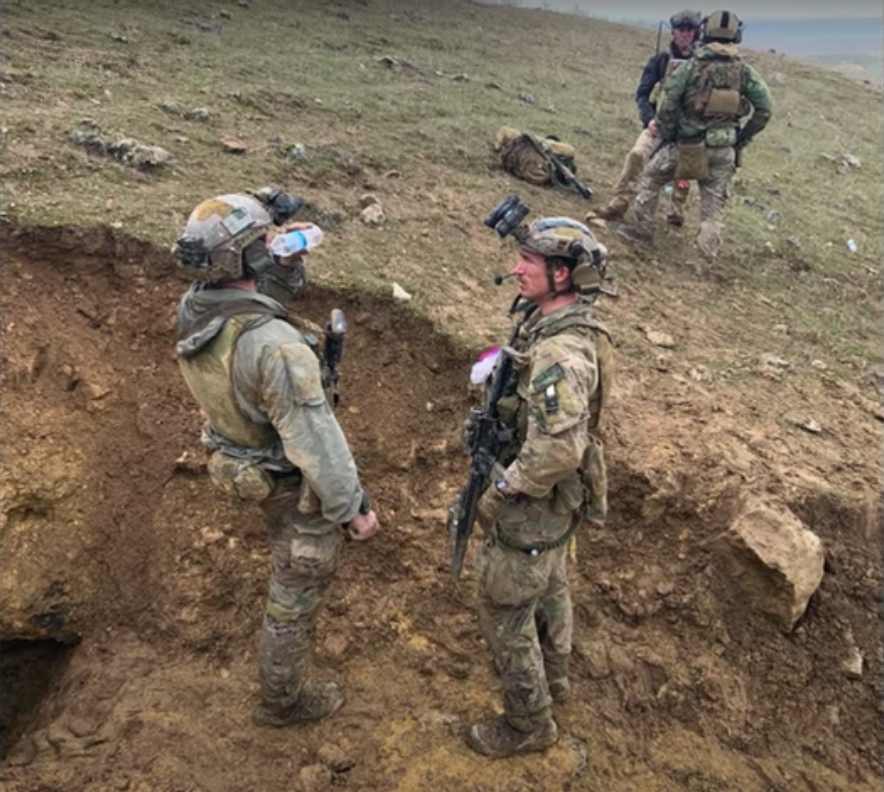
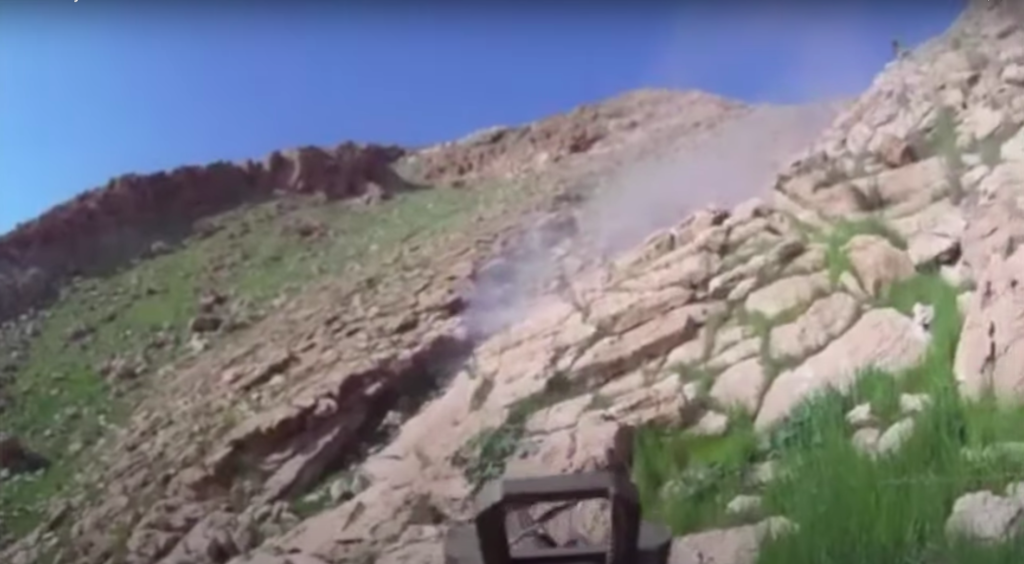
Marine Raiders in Iraq (Photo: Youtube/Talons Reach Foundation)

“The Daesh fighters popped out of one entrance and killed the two Americans. They dragged their bodies into the cave complex,” an Iraqi officer told The Los Angeles Times, using a disparaging term for the Islamic State. “It was a big firefight, one of the most intense we’ve faced in this period.”

Jones quickly moved to aid the French operator soon after the gun battle started despite “sustained and intense close range enemy fire” from less than 100 feet away, according to the Raider’s award citation. Using his rifle and throwing grenades, Jones then helped the wounded French operator get behind cover and to medical evacuation. The operator ultimately survived.

The Olathe, Kansas native then turned his attention to the wounded leaders of Marine Special Operations Team (MSOT) 8232, Capt. Moises Navas, and Gunnery Sgt. Diego Pongo, both 34, and again exposed himself to heavy machine-gun fire while trying to reach them after they fell into a steep ravine, according to the award citation. Jones tossed grenades into the caves and fired his rifle in a “valiant” attempt to reach his teammates, though both died from their wounds. 

“I just knew that they wouldn’t have quit for me so I’m not going to quit,” Jones said.

This hero special ops Marine ran through gunfire to save wounded teammates in Iraq
A screenshot from helmet camera footage of the battle. (Photo: YouTube/Talons Reach Foundation)

“Disregarding the rounds impacting all around him, he continued engaging the enemy with rifle fire and grenades until he was driven back by the heavy volume of enemy fire,” the citation says. “Several hours into the pitched battle, he mounted a third attack on the enemy but sustained a gunshot to the leg.” Jones recalled the enemy round that went into his right shin felt like “being smacked by a baseball bat.”

Jones, a tactical element leader in charge of several Marines, refused medical treatment and “continued fighting until forcibly evacuated” from the battlefield, the citation said. A helicopter hoisted him off the mountain.

Jones, who went through a “long and grueling recovery process” from his wound, was medically retired from the Corps in 2020, according to the website of a nonprofit he founded, the Talons Reach Foundation.

https://www.youtube.com/watch?v=uKwF6BYrcr0

‘Both men epitomize what it means to be a Marine Raider’

The deaths of two Marine Raiders in the mountains of Iraq in March 2020 sent shockwaves through a close-knit Marine special operations community that was still grieving the loss of an enlisted Raider killed in August 2019.

“The loss of these two incredible individuals is being felt across our organization,” said Col. John Lynch, commanding officer of the Marine Raider Regiment. “But it cannot compare to the loss that their families and teammates are experiencing. Both men epitomize what it means to be a Marine Raider. They were intelligent, courageous, and loyal. They were dedicated leaders, true…

[ad_2]

Source link

U.S. envoy to visit Ethiopia to try to halt fighting

U.S. envoy to visit Ethiopia to try to halt fighting

[ad_1]

NAIROBI, Aug 13 (Reuters) – U.S. President Joe Biden is sending his special envoy for the Horn of Africa to Ethiopia amid international alarm at the escalation of a war that has killed thousands and created a humanitarian crisis in one of the world’s poorest regions.

White House national security adviser Jake Sullivan, announcing the trip by envoy Jeffrey Feltman, urged Ethiopia’s government and the Tigray People’s Liberation Front (TPLF) to come to the negotiating table after nine months of conflict.

“Months of war have brought immense suffering and division to a great nation that won’t be healed through more fighting,” he tweeted late on Thursday.

Prime Minister Abiy Ahmed’s spokesperson did not immediately respond to a request for comment on Feltman’s travel.

Abiy’s federal troops and forces from the Tigray People’s Liberation Front (TPLF), which control Tigray, have been battling since November in a war that has killed thousands of people, sparked a major refugee crisis and been marked by ethnic killings, rape as a weapon of war and a humanitarian crisis.

The United Nations warned in July that more than 100,000 children in Tigray could suffer life-threatening malnutrition in the next 12 months.

This week, the rebellious Tigrayan forces said they were in talks to forge a military alliance with insurgents from Ethiopia’s most populous region, Oromiya, heaping pressure on the government in Addis Ababa. read more

The leader of the Oromo Liberation Army (OLA), told Reuters by phone on Thursday that the group had opted to join forces with the TPLF, whom they had bitterly opposed during their three decades in power in Ethiopia, because they now have now have a common cause.

“I hope we are going to squeeze this government, and if possible – and I know it’s possible – we are going to overthrow this regime and stop this crisis,” said OLA leader Kumsa Diriba, who goes by the nom de guerre Jaal Marroo.

The government has designated both the TPLF and the OLA as terrorist organisations.

Also this week, the government urged citizens to join the fight against the resurgent Tigrayan forces. It said all capable Ethiopians should join the army, special forces and militias to show their patriotism. read more

After retaking control of most of Tigray in late June and early July, Tigrayan forces have pushed into the adjoining Afar and Amhara regions, capturing the United Nations World Heritage site of Lalibela last week. read more

Reporting by Maggie Fick; Editing by Nick Macfie

Our Standards: The Thomson Reuters Trust Principles.

[ad_2]

Source link

Syria, Airpower, and the Future of Great-Power War

Syria, Airpower, and the Future of Great-Power War

[ad_1]

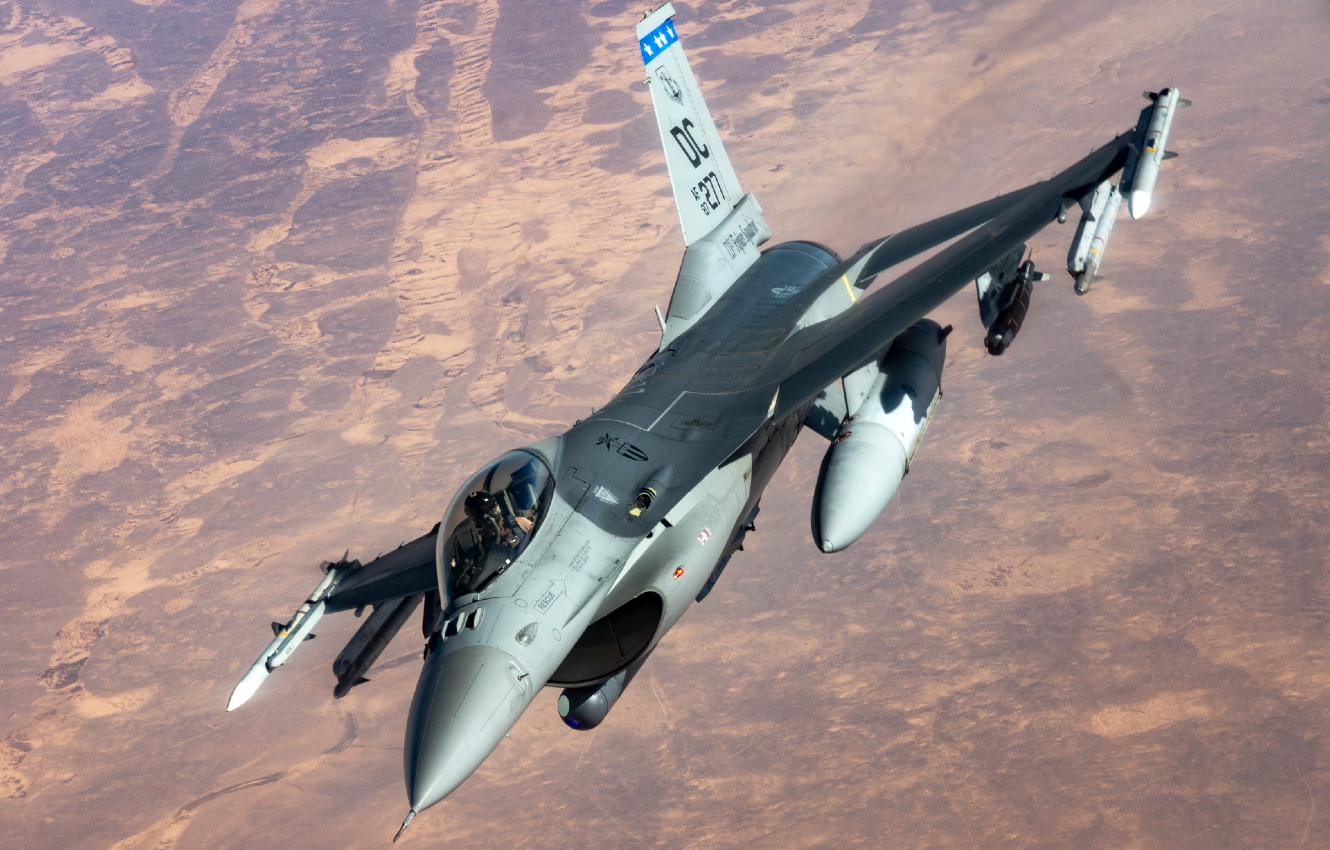
During the war in Syria, the U.S. Air Force participated in operations it rarely trained for. Russian fighter aircraft regularly flew sorties across the Euphrates River toward U.S. positions, even though the two countries were not direct antagonists in the conflict. In response, U.S. fighters would — during times of tension — intercept the incoming jets and engage in maneuvers to prevent them from dropping bombs near American and partner positions on the ground. Despite a deconfliction mechanism between Moscow and Washington to manage air operations, this type of incident has been a fairly common occurrence in Syrian airspace from 2016 to the present.

While the risk of uncontrolled escalation between the two powers remained low throughout most of the conflict, this was the first time that Western and Russian pilots have routinely flown so close to one another in combat since the 1973 Arab-Israeli war in  Sinai. The air war in Syria is a great example of what great-power competition may actually look like in scenarios short of officially declared combat: urbanized and chaotic. Russian aerial operations, including how Moscow sought to shape broader opinion about the conflict, highlight how great powers may choose to use force in peripheral conflicts that challenge American interests, but not the U.S. conventional military directly.


As the U.S. Air Force prepares for conflict with Russia and China, its interactions with Russian forces in Syria offer valuable lessons about the “urbanization” of aerial combat and its operational and tactical nuances. First, great-power conflict may not result in direct combat, but instead involve each country fighting for strategic leverage in third countries using a mixture of airpower and elite ground forces. Second, powers hostile to the United States may try to complicate U.S. action in ways that fall below the threshold of officially declared war, but which skirt the line of hostile action and complicate how U.S. forces may use force in dense and complicated combat environments. Third, U.S. Air Force training scenarios do not fully account for the complexity of an air war resembling the American experience in Syria. As a result, assumptions about how adversaries may challenge U.S. interests with airpower should be updated beyond linear notions of Joint Forcible Entry, even while training for a high-end fight continues to ensure that U.S. pilots retain critical advantages over adversary nations.

The Challenge in Syria: Non-Hostile Adversaries

Syria was often downplayed as a “permissive” environment for air operations because friendly forces were not kinetically engaged by enemy air defenses. Nevertheless, the Air Force faced an almost impossibly complex situation operating in Syrian airspace. U.S. aircraft were flying in proximity to Russian jets, often in support of different ground actors, but with rules of engagement that did not classify the Russian Aerospace Forces as a hostile adversary. These interactions were also taking place within the “no escape zone” of both Russian air-to-air weapons and the relatively intact Syrian integrated air defenses. In short, the delineation between permissive and non-permissive was purely academic.

The United States and its coalition partners also chose not to degrade or disable the Syrian regime’s integrated air defense system, which remained potent throughout the war and used to fire at Israeli aircraft, but rarely used to target American or coalition pilots. To make matters even more complicated, the Russians improved Syrian air defenses with the deployment of the S-300 and S-400, raising concerns that Russian technicians and operators may be present at these sites to help operate them. The Soviet Union used this tactic during the Cold War to deter the targeting of air defense sites in third countries mired in conflict.

To manage this air environment, the United States and Russia relied upon a deconfliction mechanism to prevent midair collisions and inadvertent escalation. The ostensible barrier in Syria’s northeast separating the two forces was the Euphrates River, which at its widest point is around 1,000 feet wide. The aircraft the United States and Russia deployed to Syria can cover 1 mile in about seven seconds at normal cruising altitude and airspeed, and air-to-ground weapon release zones were often several miles from a target. A large, easy to identify object makes sense to deconflict two air forces because a river never moves and can be seen from miles away, so pilots should have little trouble adhering to territorial boundaries to help minimize risk of unintended escalation and a midair collision. However, the deconfliction mechanism did not preclude either side from crossing the river. Instead, it asked each air force to provide pre-notification for planned flights that would cross the body of water. At times, Russia would simply choose not to provide that information, or cross the river…

[ad_2]

Source link

US sending 3K troops for partial Afghan embassy evacuation

US sending 3K troops for partial Afghan embassy evacuation

[ad_1]

WASHINGTON (AP) — Just weeks before the U.S. is scheduled to end its war in Afghanistan, the Biden administration is rushing 3,000 fresh troops to the Kabul airport to help with a partial evacuation of the U.S. Embassy. The move highlights the stunning speed of a Taliban takeover of much of the country, including their capture on Thursday of Kandahar, the second-largest city and the birthplace of the Taliban movement.

The State Department said the embassy will continue functioning, but Thursday’s dramatic decision to bring in thousands of additional U.S. troops is a sign of waning confidence in the Afghan government’s ability to hold off the Taliban surge. The announcement came just hours after the Taliban captured the western city of Herat as well as Ghazni, a strategic provincial capital south of Kabul. The advance, and the partial U.S. Embassy evacuation, increasingly isolate the nation’s capital, home to millions of Afghans.

“This is not abandonment. This is not an evacuation. This is not a wholesale withdrawal,” State Department spokesman Ned Price said. “What this is is a reduction in the size of our civilian footprint.”

Price rejected the idea that Thursday’s moves sent encouraging signals to an already emboldened Taliban, or demoralizing ones to frightened Afghan civilians. “The message we are sending to the people of Afghanistan is one of enduring partnership,” Price insisted.

President Joe Biden, who has remained adamant about ending the 19-year U.S. mission in Afghanistan at the end of this month despite the Taliban sweep, conferred with senior national security officials overnight, then gave the order for the additional temporary troops Thursday morning.

Secretary of State Antony Blinken and Defense Secretary Lloyd Austin spoke with Afghan President Ashraf Ghani on Thursday. The U.S. also warned Taliban officials directly that the U.S. would respond if the Taliban attacked Americans during the temporary U.S. military deployments.

Britain’s ministry of defense said Thursday that it will send around 600 troops to Afghanistan on a short-term basis to help U.K. nationals leave the country. And Canadian special forces will deploy to Afghanistan to help Canadian staff leave Kabul, a source familiar with the plan told The Associated Press. That official, who was not authorized to talk publicly about the matter and spoke on condition of anonymity, did not say how many special forces would be sent.

The Pentagon’s chief spokesman, John Kirby, said that in addition to sending three infantry battalions — two from the Marine Corps and one from the Army — to the airport, the Pentagon will dispatch 3,500 to 4,000 troops from a combat brigade of the 82nd Airborne Division to Kuwait to act as a reserve force. He said they will be on standby “in case we need even more” than the 3,000 going to Kabul.

Also, about 1,000 Army and Air Force troops, including military police and medical personnel, will be sent to Qatar in coming days to support a State Department effort to accelerate its processing of Special Immigrant Visa applications from Afghans who once worked for the U.S. government and feel threated by the Taliban, Kirby said.

The 3,000 troops who are to arrive at the Kabul airport in the next day or two, Kirby said, are to assist with security at the airport and to help process the departure of embassy personnel — not to get involved in the Afghan government’s war with the Taliban. Biden decided in April to end U.S. military involvement in the war, and the withdrawal is scheduled to be complete by Aug. 31.

The U.S. had already withdrawn most of its troops, but had kept about 650 troops in Afghanistan to support U.S. diplomatic security, including at the airport.

Kirby said the influx of fresh troops does not mean the U.S. is reentering combat with the Taliban.

“This is a temporary mission with a narrow focus,” he told reporters at the Pentagon.

The viability of the U.S.-trained Afghan army, however, is looking increasingly dim. A new military assessment says Kabul could come under Taliban pressure as soon as September and, if current trends hold, the country could fall to the Taliban within a few months.

Price, the State Department spokesman, said diplomatic work will continue at the Kabul embassy.

“Our first responsibility has always been protecting the safety and the security of our citizens serving in Afghanistan, and around the world,” Price said at a briefing, calling the the speed of the Taliban advance and resulting instability “of grave concern.”

Shortly before Price’s announcement, the embassy in Kabul urged U.S. citizens to leave immediately — reiterating a warning it first issued Saturday.

The latest drawdown will further limit the ability of the embassy to conduct business, although Price maintained it would still be able to function. Nonessential personal had already been withdrawn from the embassy in April after Biden’s withdrawal announcement and it was…

[ad_2]

Source link