Special Forces sergeant major fired gun during domestic assault, prosecutors say

Special Forces sergeant major fired gun during domestic assault, prosecutors say

[ad_1]

A Special Forces sergeant major faces a general court-martial in March on several UCMJ charges stemming from a series of alleged domestic assaults in 2019, according to Army officials.

Sgt. Maj. Travis Alfred is a senior Special Forces NCO assigned to 1st Special Forces Command, according to Maj. Dan Lessard, the unit’s spokesperson. The Fort Bragg, North Carolina-based unit, which is overseeing the trial, provided a heavily-redacted copy of Alfred’s charge sheet upon Army Times’ request.

“[Alfred] is facing a court martial for a number of charges centered on alleged domestic violence and threatening his spouse,” Lessard said in a statement accompanying the document. “We take all allegations of domestic violence seriously, but we also want to make clear that this service member is innocent until proven guilty.”

Alfred’s military attorney declined to provide comment for this story when reached for comment.

According to the charge sheet, Alfred assaulted an unnamed family member on three separate occasions in late 2019.

Alfred struck the family member “on [their] shoulder with a broom” during the first reported assault, which the charge sheet said occurred in September 2019. Prosecutors also said Alfred “strangl[ed]” and threatened to kill the family member during the alleged attack.

Then on Nov. 11, 2019, Alfred “push[ed]” the family member “on [their] head” and held their “arms with his knees” and again threatened to kill them, the charge sheet stated.

During a third assault on Nov. 20, 2019, Alfred choked the family member, threatened to kill them, pointed a loaded gun at them, and fired it “under circumstances such as to endanger human life,” the charge sheet stated.

It’s not clear why the alleged incidents, which occurred off-post in Cameron, North Carolina, are being prosecuted via court-martial rather than in the civilian justice system.

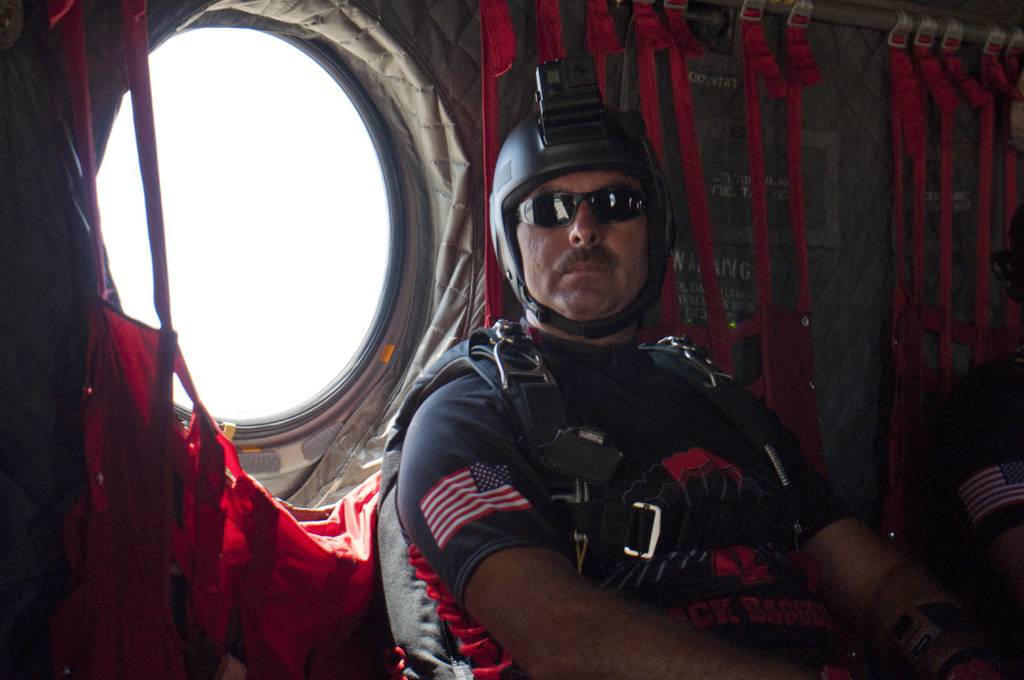
Alfred, who was once a member of Army Special Operations Command’s parachute demonstration team, the Black Daggers, faces multiple specified charges under Article 115 (communicating threats), Article 128 (assault), and Article 128b (domestic violence).

The alleged firearm discharge resulted in an Article 114 charge.

Alfred’s court-martial is tentatively scheduled for March 2022, according to court records available online.

Davis Winkie is a staff reporter covering the Army. He originally joined Military Times as a reporting intern in 2020. Before journalism, Davis worked as a military historian. He is also a human resources officer in the Army National Guard.

[ad_2]

Source link
Marine Special Ops Command Hones its ‘Cognitive Raiders’

Marine Special Ops Command Hones its ‘Cognitive Raiders’

[ad_1]

Marine Special Ops Command Hones its ‘Cognitive Raiders’


9/7/2021


By
Scott R. Gourley


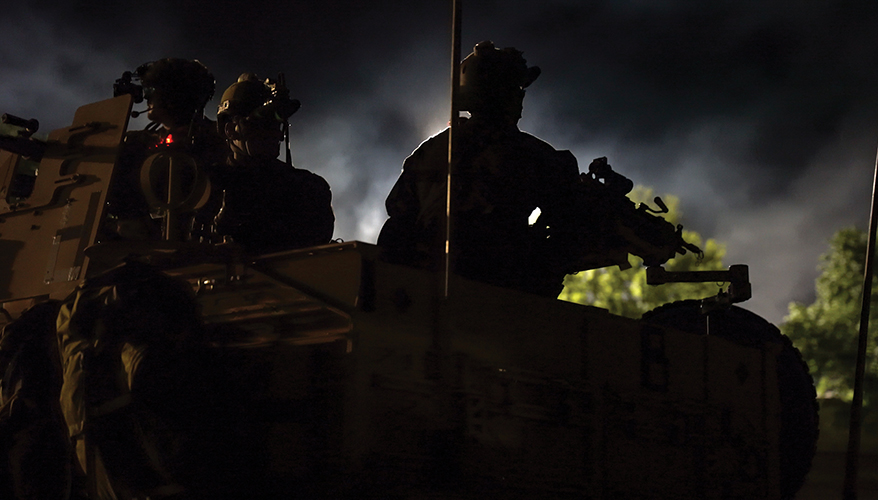
Marine Raiders provide security during a readiness exercise.

Marine Corps photo by Cpl. Brennan Priest

Marine Raiders are some of the nation’s most elite warfighters, but Marine Corps Special Operations Command is pushing to make them even better with its “Cognitive Raider” initiative.

The Marine Corps Special Operations Forces 2030 strategic vision outlined the Cognitive Raider innovation pathway, asserting that troops sent into future special operations environments “must be able to understand them and then adapt their approaches across an expanded range of solutions,” adding, “While tough, close-in, violent actions will remain a feature of future warfare, MARSOF must increasingly integrate tactical capabilities and partnered operations with evolving national, theater and interagency capabilities across all operational domains, to include those of information and cyber.”

To facilitate that understanding and adaptation, MARSOC has implemented an annual event called the Cognitive Raider Symposium, also known as CRS. Co-hosted with the Naval Postgraduate School’s Defense Analysis Department, the multi-day gatherings provide myriad learning venues designed to hone the Marine Raiders’ tactical edges. Significantly, the symposium not only addresses the Cognitive Raider pathway, but also illustrates MARSOF as a true connector of ideas and concepts.

Opening the third iteration of the symposium in early June, Col. John Lynch, MARSOC deputy commander, identified several key traits that help to define a Cognitive Raider, offering, “It starts with being a problem solver, one that never becomes complacent but instead remains adaptable and forward thinking.”

He described an “edge” where the Marine Raider asserts, “I’m not satisfied. There is more out there. There are ways to be better. There are ways to be more efficient. There are ways to be more lethal. And there are better ways to accomplish what we’re trying to accomplish.

“I cannot pick a single period of time in my career … where we have been challenged to evolve at the pace we’re being challenged to evolve right now,” he added. “It is remarkable how fast we have to do it.”

Douglas Borer, chair of the Defense Analysis Department at the Naval Postgraduate School, noted the conference’s focus on “frontier technologies,” offering both low-tech and high-tech examples while discussing how the technologies might alter tactical and strategic realities against a background of great power competition with nations such as China and Russia.

“When I asked what frontier technologies a Cognitive Raider mostly followed, the list included things like automation, AI, advanced manufacturing, biotech, quantum computing, 5G, next-gen hardware robotics and space,” said Matt Stafford, a State Department representative. “These largely follow State’s concerns. I know we both have much longer lists that we’re also paying attention to, but it’s good to hear that we share these worries. We also share some of your background worries about how these things will get used, or combined with each other, or just combined with existing technologies.”

Master Gunnery Sgt. Mark Castille, command senior enlisted leader at the Marine Raider Training Center, engaged conference participants with a presentation focused on critical thinking tools and methods, capping the discussion with a participatory creative thinking exercise for attendees.

The CRS series brings in speakers from diverse and unique backgrounds. This approach was reflected in presentations by writers and analysts P.W. Singer and August Cole, co-authors of the novel Ghost Fleet, which has appeared on the Commandant of the Marine Corps’ Professional Reading List.

Singer noted that he had been asked to speak on the topic “What comes next?” adding, “There is a challenge in that, particularly to the defense space, where the belief is that wrestling with the future is something that we shouldn’t do, because we get it wrong so often.”

Against that caveat, Singer discussed the implications of China’s 19th Party Congress’ order for the Chinese military to “accelerate the development of military ‘intelligentization.’”

“We need to use new modes…

[ad_2]

Source link

Guinea President, Alpha Condé, Seized in Military Coup

Guinea President, Alpha Condé, Seized in Military Coup

[ad_1]

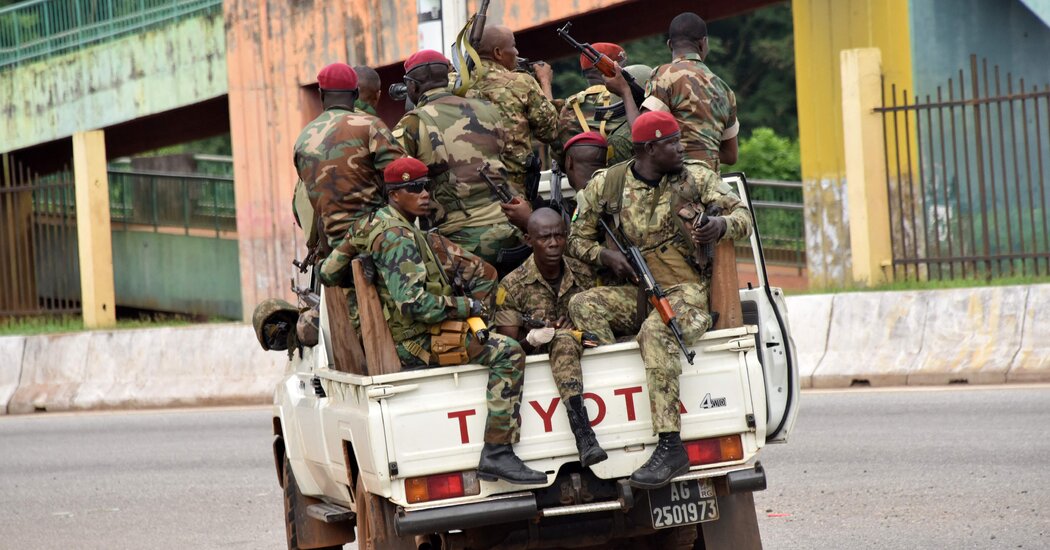
The head of Guinea’s special forces said Sunday that he had “seized” the president of the West African country after a morning of heavy gunfire and reports of a coup in the capital, Conakry.

“We have decided, from now on, to dissolve the Constitution,” declared Col. Mamady Doumbouya, the special forces head, appearing later on state television with Guinea’s national flag draped around his shoulders and members of the military surrounding him.

The move comes barely a year after the president, Alpha Condé, won a contentious third term after changing the Constitution, allowing him to stay in power beyond the two-term limit.

If the coup attempt proves successful, Guinea will become the third West African country to experience a violent transfer of power in the past five months.

In April, the president who had ruled Chad for three decades was killed on the battlefield and replaced by his son in what academics called a “covert coup.” In May, Mali’s vice president, Assimi Goïta, arrested the president, prime minister and defense minister in the country’s second coup within nine months.

Guinea is no stranger to coups.

Before Mr. Condé became the country’s first democratically elected leader in 2010, there were two military takeovers, in 1984 and 2008.

After he assumed office, his government turned Guinea into a major exporter of bauxite, which is used to produce aluminum — but it came at a cost to Guineans. Human rights groups say that mining companies have upended the lives and livelihoods of rural communities.

Colonel Doumbouya said he and his men had the president in custody, and on Sunday, the United Nations secretary-general, António Guterres, calling for his release, said he was following the situation closely. “I strongly condemn any takeover of the government by force of the gun,” he said on Twitter.

Colonel Doumbouya said he was acting in response to the people’s will to confront poverty and endemic corruption.

“Guinea is beautiful,” he said near the end of his televised announcement, offering a brutal analogy: “We no longer need to rape her. We need to make love to her, that’s all.”

On social media, videos circulated of Mr. Condé apparently under heavy guard, his clothes in slight disarray.

Other video showed Guineans taking to the streets in celebration and military vehicles moving down Conakry’s streets, accompanied by dozens of motorcycles, their riders raising fists in the air.

Colonel Doumbouya is a former member of the French Foreign Legion, who, according to videos posted online by Guinean news media, received training at Flintlock, the U.S. military’s biggest annual exercise in Africa.


[ad_2]

Source link

Mali Special Forces Commander Held Over 2020 Police Violence

Mali Special Forces Commander Held Over 2020 Police Violence

[ad_1]

A Malian special-forces commander was detained Friday for his alleged role in violently suppressing protests against former president Ibrahim Boubacar Keita, who was later ousted in a coup, a legal source said

Bamako, (APP – UrduPoint / Pakistan Point News – 3rd Sep, 2021 ) :A Malian special-forces commander was detained Friday for his alleged role in violently suppressing protests against former president Ibrahim Boubacar Keita, who was later ousted in a coup, a legal source said.

The military deposed Keita in August 2020 after weeks of anti-government protests fuelled by grievances over perceived corruption and the president’s inability to stop the long-running jihadist conflict in the Sahel state.

One such protest on July 10, 2020 devolved into several days of lethal clashes with security forces.

Mali’s political opposition said at the time that 23 were killed during the unrest; the UN reported 14 protesters killed, including two children.

An investigation was opened into the killings in December 2020.

On Friday, a senior legal official, who requested anonymity, said that the head of the police counter-terrorism unit, Oumar Samake, had been detained for his alleged role in the violence.

Investigators are also looking at other security officers and civilians, he added.

Such investigations are highly sensitive in Mali due to their potential to reveal the influence of some powerful figures amid ongoing political uncertainty.

Bougouna Baba, a police union representative, told AFP that “all the police unions condemn this arrest because (Oumar Samake) has bosses who gave him instructions and they must answer for them”.

Mali’s military appointed civilian leaders of an interim government after the 2020 coup that ousted Keita.

But these civilian leaders were themselves deposed in May — in a second coup.

Military strongman Colonel Assimi Goita has pledged to restore civilian rule and stage elections in February next year.

However there are doubts about whether the government will be able to hold elections within such a short time frame.

Mali has been struggling to quell a brutal jihadist insurgency which emerged in 2012, for example, which has left swathes of the vast country outside of government control.


[ad_2]

Source link

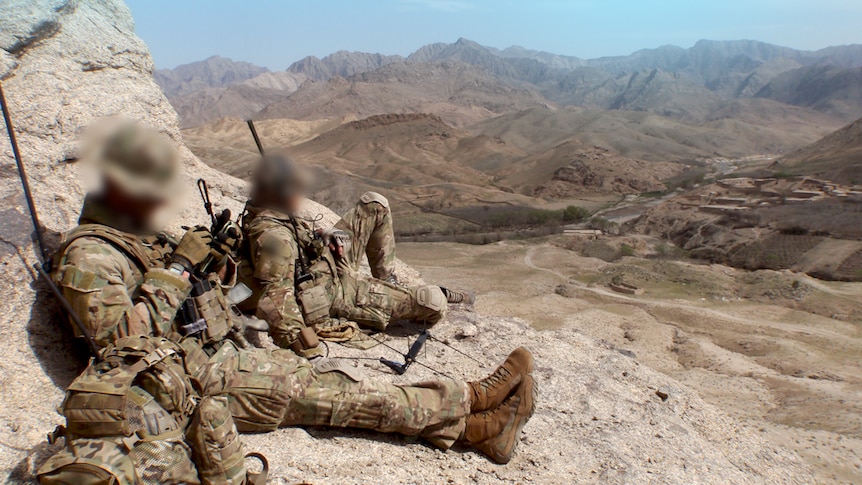
3 Squadron SAS soldiers rest on a mountain in Afghanistan in 2012.

Afghanistan’s rapid collapse fuels anger within elite SAS over public ‘mistreatment’

[ad_1]

The Taliban’s swift re-emergence is reigniting bitterness inside Australia’s most elite military unit over the way SAS soldiers were dealt with following damning Afghanistan war crime allegations.

Despite recent praise for its role in the Afghanistan evacuation mission, sources inside the highly secretive Special Air Service Regiment (SASR) say morale is at “rock bottom,” and the rival 2nd Commando Regiment “appears to be taking over” special forces command.

Last year the Brereton inquiry found “credible evidence” that Australian special forces were responsible for the murder of at least 39 Afghans during this country’s longest war. 

This week the government unveiled a “command and control” overhaul of the SAS, saying it would make the regiment “stronger and ready for the challenges ahead”. 

A recent open letter written by a former “senior” non-commissioned SAS officer claims many Afghanistan veterans are being removed from the regiment after being “judged guilty by association”.

The anonymous soldier, who claims he too was “recently forced out” despite no “adverse findings” from his Afghanistan service, argues many colleagues are also having “their careers stripped away from them”.

“Multiple SASR operators who served in Afghanistan and who didn’t receive a Potentially Affected Persons notice (PAP) are systematically being forced out of the SASR,” the officer writes.

SAS soldiers with two dogs overlook a valley in Afghanistan in 2012.
More than 100 people attached to the SAS have reportedly left the regiment since the release of a war crimes inquiry.(

Supplied

)

In the document, titled The Piecemeal Destruction of Australia’s Special Missions Unit, the author claims “right now there are currently 50 middle management SASR operators discharging from SASR and ADF”.

Another SAS figure, speaking to the ABC on the condition of anonymity, claimed a total of “more than 100” members of the elite unit had left since November’s public release of the Brereton report.

“The Commandos are slowly taking over the Special Operations Command (SOCOMD) which is now also run by an officer that has never served with the SAS.”

The Defence Department has declined to say how many members of the SASR have left following the Brereton inquiry.

But it recently confirmed it has commenced “administrative action” against 17 soldiers who served in Afghanistan.

“Army initiated administrative action, inclusive of a Notice to Show Cause, for termination of service against 17 individuals where alleged failure to comply with Australian Defence Force expectations and values was identified,” the Department said on its website.

The ABC understands 13 of the soldiers have since been discharged for medical or other reasons, while three remain in full time or reserve service, and another is now serving with the United Arab Emirates military.

Last week Defence Minister Peter Dutton publicly apologised to soldiers who had their “show cause” notices withdrawn because of a lack of evidence to warrant further investigation.

“Clearly if people have been wrongly accused and they have now been cleared of that then I do apologise for what they have been through, what their families have been through,” Mr Dutton told Radio 2GB.

Defence has also declined to comment on speculation former SAS members may take legal action against the army for the manner in which they were removed.

[ad_2]

Source link

US confirms soldier from east Tennessee killed in bombing

US confirms soldier from east Tennessee killed in bombing

[ad_1]

This photo provided by U.S. Army Special Forces Command shows Army Staff Sgt. Ryan C. Knauss. The Defense Department said Saturday, Aug. 28, 2021,  that  Knauss was killed in Thursday’s bombing in Kabul, Afghanistan, along with 11 Marines and one Navy sailor. Eighteen other U.S. service members were wounded and more than 160 Afghans were killed in the bombing blamed on Afghanistan’s offshoot of the Islamic State group.  (US Army Special Forces Command via AP)

This photo provided by U.S. Army Special Forces Command shows Army Staff Sgt. Ryan C. Knauss. The Defense Department said Saturday, Aug. 28, 2021, that Knauss was killed in Thursday’s bombing in Kabul, Afghanistan, along with 11 Marines and one Navy sailor. Eighteen other U.S. service members were wounded and more than 160 Afghans were killed in the bombing blamed on Afghanistan’s offshoot of the Islamic State group. (US Army Special Forces Command via AP)

This photo provided by U.S. Army Special Forces Command shows Army Staff Sgt. Ryan C. Knauss. The Defense Department said Saturday, Aug. 28, 2021, that Knauss was killed in Thursday’s bombing in Kabul, Afghanistan, along with 11 Marines and one Navy sailor. Eighteen other U.S. service members were wounded and more than 160 Afghans were killed in the bombing blamed on Afghanistan’s offshoot of the Islamic State group. (US Army Special Forces Command via AP)

KNOXVILLE, Tenn. (AP) — A soldier from east Tennessee was one of 13 U.S. troops killed in a suicide bombing at Afghanistan’s Kabul airport this week, the Department of Defense said Saturday.

Army Staff Sgt. Ryan C. Knauss, 23, of Corryton, was killed in Thursday’s bombing, along with 11 Marines and one Navy sailor, the Defense Department said in a news release. Eighteen other U.S. service members were wounded and more than 160 Afghans were killed in the bombing blamed on Afghanistan’s offshoot of the Islamic State group.

Knauss had been stationed at Fort Bragg, North Carolina, and he was part of the 9th Psychological Operations Battalion, 8th Psychological Operations Group, the Defense Department said.

In a statement posted on Twitter on Saturday, 8th Psychological Operations Group Col. Jeremy Mushtare said Knauss’ death was “devastating to our formation and Army family.”

“Ryan was the embodiment of an Army Special Operations Forces soldier, a testament to the professionalism of the non-commissioned officer corps, and a steadfast husband and teammate,” the tweet said.

Corryton is located north of Knoxville. Knauss’ grandfather, Wayne Knauss, told WATE-TV the family received word of Ryan’s death Friday. Knauss said his grandson attended Gibbs High School and grew up in a Christian home.

“A motivated young man who loved his country,” Wayne Knauss said. “He was a believer, so we will see him again in God’s heaven.”

Stepmother Linnae Knauss said Ryan planned to move to Washington after he returned to the U.S.

“He was a super-smart hilarious young man,” she said.

[ad_2]

Source link

A Stranded Afghan Interpreter and the Soldiers Who Would Not Let Go

A Stranded Afghan Interpreter and the Soldiers Who Would Not Let Go

[ad_1]

The Americans called him “Mikey,” and as an interpreter for the Special Forces he did not just bridge language gaps. He did everything from easing negotiations with local Afghans loyal to the Taliban to warning a convoy away from an ambush.

“Mikey wasn’t just a regular interpreter,” recalls Sgt. First Class Joseph Torres, a Texan who served in the Special Forces. “He was our lifeline. He went everywhere we went on the most remote and dangerous missions. It was because of him that we returned home alive after deployments.”

But the day after Kabul fell to the Taliban, the 34-year-old Afghan was on his own.

Determined to get out of Afghanistan, he was making a desperate run to the airport with his wife and two young sons when they were caught in gunfire amid the crush of people who had gathered there to escape. His wife and one son, 6, were both shot in the foot.

As he carried the bloodied and screaming child in search of a hospital, Mikey says, he flashed back to his time on the battlefield with American forces.

“I kept thinking, after everything I did for the Americans,” he said. “After all my hard work and risking my life, now this is what happens to my family? They are leaving us to die here.”

Mikey — who is being identified by his American nickname only for safety reasons — is one of tens of thousands of Afghans who worked for the United States and have applications pending for expedited visas allowing them to resettle in America. President Biden has pledged that Afghan allies will be welcomed to “their new homes” and called the situation on the ground “heartbreaking.”

But the evacuation of U.S. citizens and green-card holders remains the immediate priority of the military operation underway at the Kabul airport. That means that for many Afghans who worked with the United States, there is little to do but wait — and try to keep out of the sights of the Taliban.

Mikey worked as an interpreter for the Special Forces from 2009 to 2012 in Kandahar, and from 2015 to 2017 in Kabul. He was once so badly wounded in an explosion that he had to be airlifted to a field hospital.

The night his wife and son were shot, Mikey got them into a hospital and then went into hiding. Preferring rooms without windows, he switched locations four times in one week.

He was waiting for the U.S. government to give him an evacuation plan. He was waiting for the approval of his visa application.

And he was waiting for the Taliban to find him.

In interviews from his bunkers in Kabul as events unfolded over the past week, Mikey talked about the ordeal of trying to keep himself alive and his family safe in the chaos left behind by the U.S. exit from Afghanistan. With no word from the U.S. government about when or how he might get out, he realized that the bonds he had forged with U.S. soldiers might offer his only hope for safe passage.

That is where Sergeant Torres, who now lives in Pecos, Tex., came in.

He had worked with Mikey on multiple deployments, and now he had a new battle: leading a global operation to get him out.

To coordinate those efforts, Sergeant Torres and a group of about 20 former and current members of the military formed a WhatsApp chat group and an email thread. They reached out to military and State Department contacts, along with members of Congress, to try to get Mikey and his family onto a military evacuation plane.

They say they understand why U.S. citizens are getting priority when it comes to evacuations. The outrage is over the lack of a clear plan for all those Afghans who worked side by side with the Americans, who may have targets on their backs now that the Taliban is in control.

“It’s infuriating,” Sergeant Torres said. “My heart breaks for everyone who doesn’t have the support Mikey has.”

It was not the case that Mikey tried to get out of Afghanistan only when the danger became clear.

He started his special visa application in 2012, when he was in Kandahar with the military. He had his interview, one of the final steps in the process, in November 2018 when he worked at Camp Duskin in Kabul. He is still waiting for medical tests and approval. Emails he has sent to follow up on his application have gone unanswered.

Across the United States, members of the armed forces are leading their own campaigns to pressure the Biden administration to scale up the evacuation of Afghans who worked as their interpreters. They have taken to social media and created fund-raising campaigns such as “Help Our Interpreters.”

Military interpreters are among the most vulnerable of Afghan allies. The nature of their work required that they accompany military personnel in the battlefield and be present during interactions with locals. If residents of the areas where they worked were hostile to Americans, the interpreters could be easily identified for the Taliban.

Mikey was a teenager in Kabul when the United States invaded Afghanistan in 2001. In high…

[ad_2]

Source link

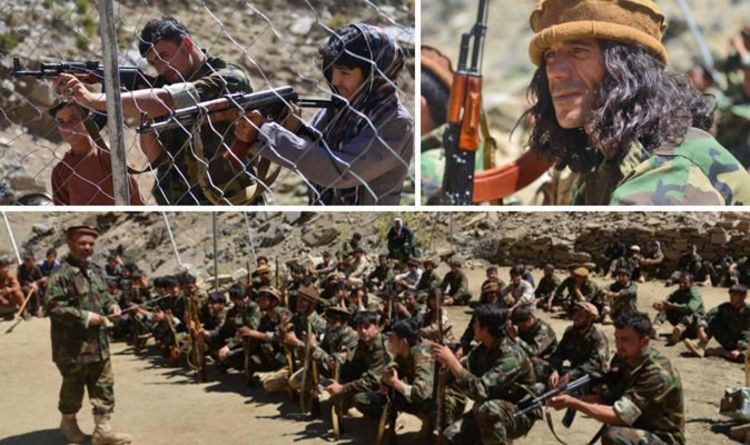
Taliban LIVE: Afghan resistance movement growing as groups take part in military training | World | News

Taliban LIVE: Afghan resistance movement growing as groups take part in military training | World | News

[ad_1]

There is a danger that not all Irish citizens will be evacuated before the deadline on August 31, according to Irish foreign affairs minister Simon Coveney. 

Mr Coveney said: “I don’t want to raise expectations unrealistically, that everybody will get out as a result of this.

“Even beyond the 31st of this month, into September, we will continue to work with Irish citizens if they’re in Kabul.

“Everybody knows, unless President Biden makes a decision today to work with partners to extend their presence there beyond the 31st, everybody knows we’re talking about days not weeks.”

Ten Irish citizens have already been evacuated with the assistance of the Department of Foreign Affairs and the embassy in Abu Dhabi.

Those seeking evacuation have been described as mainly family groups.

There is currently 36 Irish citizens and their family members still in Afghanistan.

Mr Coveney said: “The remaining are 24 Irish citizens and 12 non-Irish family members that have visas to come to Ireland.

“They are predominantly Afghan-Irish, if you like.

“They’re Irish citizens and we’re absolutely committed to them.”

He added that evacuating them is more complicated, because they need to leave as family units.

He also said that “because they are Afghan as well as Irish, it is more difficult get them through the crowd and into the airport”.

“We have places on planes for all of these 36 people.”

Mr Coveney said sending the Irish team to Kabul is not without risk, but he told Newstalk: “On balance, this is the right thing to do.”


[ad_2]

Source link

The Globe and Mail

Canadian special forces may be used to rescue Afghan interpreters, support staff from Kabul: Sajjan

[ad_1]

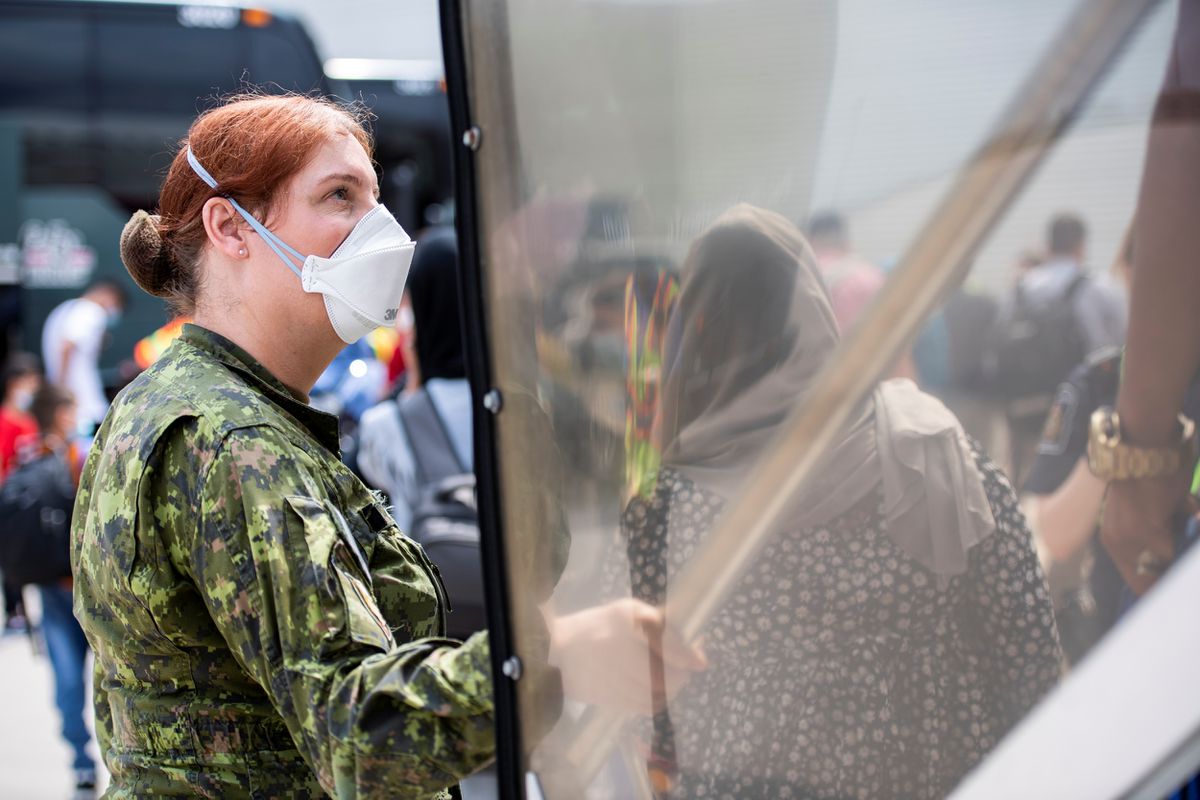
A Canadian Armed Forces Medic assists Afghan refugees who supported Canada’s mission in Afghanistan disembarking a CC-150 Polaris aircraft at Toronto Pearson International Airport in Mississauga, Ontario, Canada August 13, 2021.

CPL RACHAEL ALLEN/DND/Reuters

Defence Minister Harjit Sajjan says Canadian special forces have been given the “flexibility” to rescue Canadians and former Afghan support staff and bring them to the safety of the Hamid Karzai airport in Kabul for evacuation flights to Canada.

The United States has come under criticism for refusing to send U.S. troops outside the security of the airport perimeter even though British and French special forces have carried out rescue missions in Kabul.

The British and French put their special forces into action because of reports of Taliban hunting down former Afghan interpreters and fixers. Afghans attempting to flee have also faced difficulty getting through a network of Taliban checkpoints lining the route to the airport.

Story continues below advertisement

Jagmeet Singh says election timing may have impeded Canada’s Afghanistan response

Fearing reprisals, Afghans rush to scrub digital presence after Taliban takeover

Crush at Kabul airport kills seven; Afghan fighters seize areas from Taliban

At a news conference Sunday, Mr. Sajjan said that Canadian special forces are empowered to do what is necessary to get people safely to the airport.

“For obvious reasons, I cannot divulge the situation of exactly what our troops are doing. But one thing I can say is that they have all the flexibility to be able make the appropriate decisions so they can take actions,” he said.

Immigration Minister Marco Mendicino also told the same news conference that “all of our forces have the full operational discretion to take whatever actions are necessary to get as many people into the airport on to those flights.”

Speaking at a campaign event in Miramichi, N.B., Prime Minister Justin Trudeau said the Defence Minister briefed him several days ago on potential operational measures to get as many people as possible out of Afghanistan.

“I don’t want to go into details, operational details right now. But I can assure you we have given the authorizations for the folks on the ground to make the right decisions to help as many people as possible given the risks,” he said.

The Pentagon has said the 5,200 U.S. forces on the ground in Afghanistan are not authorized to go outside the perimeter of the airport. Hundreds of desperate Afghans have stormed the terminal and tarmac of the facility, hoping to catch evacuation flights out.

Mr. Sajjan said there have been “many, many opportunities where people in the Canadian Armed Forces have been able to get Canadian citizens and Afghan nationals to safety.

Story continues below advertisement

“Ever single time they took the opportunity, they have weighed the risk.”

A senior government official said the minister was referring to Canadian special forces efforts at the airport and not any rescue mission in the capital where armed Taliban militants are patrolling the streets. The Globe is not identifying the official, who was not authorized to discuss operation details.

Pressed on the risk and the type of mounting rescue operations in Kabul, such as using helicopters or buses, Mr. Sajjan said that he is “not discounting anything.”

“I have to be very careful what I say about what they are doing, even the possibility of doing something because you never know when an opportunity may come up and an action that they have to take,” he said.

Not Left Behind, a group of Canadian veterans and volunteers trying to get former Afghan interpreters and support staff out of Afghanistan, has been particularly critical of Canada’s handling of the evacuation operations.

“While other countries have taken steps to help their citizens safely travel to the Kabul airport, Canadian applicants have been told to fend for themselves,” the group said in a statement Sunday. “We need to help Afghans safely reach the Kabul airport.”

Story continues below advertisement

Chaos persists outside Kabul airport The Associated Press

The government announced Sunday that just over 1,100 people have been airlifted out of Kabul with 121 flown out Saturday aboard Canadian Forces Globemaster aircraft.

Although there have been complaints from people going to the airport that they have not been able to find any Canadian Forces personnel, Mr. Sajjan insisted soldiers are present at all the entry points.

Mr. Mendicino acknowledged the significant challenges of exiting the country facing expatriates and former Afghan interpreters and fixers who worked for Canada. Taliban checkpoints on the road to Kabul’s airport “makes getting this done perilous.”

He urged people in safe houses to wait until they received either a phone call or text to proceed to the airport.

After the fall of Kabul…

[ad_2]

Source link

Here's a look at the Kabul airport perimeter and the journey Afghans must make to get inside 

Here’s a look at the Kabul airport perimeter and the journey Afghans must make to get inside 

[ad_1]

The US military cargo plane, whose hold filled with Afghans evacuating their country was captured in a now famous photo, flew more than 800 people on board – far more than originally confirmed by the Air Force, according to the crew who flew the mission.

The crew of a C-17 US military cargo plane flew 823 people out of Kabul on an evacuation flight on Aug. 15, the crew said in an interview Friday on CNN’s New Day. It was previously believed that the plane carried 640 people on it.

The photo of Afghans sitting shoulder-to-shoulder, packed into the hold, went viral after it was published by Defense One.

The massive number of people is a record to fly on the US Air Force’s C-17 Globemaster III, a military plane that can be used to carry both cargo and passengers when needed, US Air Force spokesperson Hope Cronin said. The C-17 has been in operation for almost three decades. 

“Our 640 number was a little underestimated, we actually carried 823 out,” Technical Sergeant Justin Triola, one of the plane’s crew members, said.

A radio transmission of the crew with air traffic control highlights how extraordinary the flight was. When the pilot informed air traffic control of how many people were on board, the response was “holy hell.”

When the plane is being used to transport passengers, there are several configurations the plane’s crew can use to transport different numbers of people, ranging from 10 to 336 people at a time.

It is always at the discretion of the aircraft commander to determine what they can transport at any given time, Cronin said. 

“While there are a range of standard configurations for C-17 passenger loads, this was a dynamic situation that required a dynamic solution,” Cronin said.

The previous record of people flown on a C-17 was 670 people that were flown out by the US Air Force after Typhoon Haiyan hit the Philippines in 2013. 

Lieutenant Colonel and C-17 Aircraft Commander Eric Kut, who authorized the mission to fly those people to safety, said they are “trained to handle that, to max perform that aircraft.”

Crew members of the C-17 that flew the 823 people to safety include Kut, Triola, Airman First Class Nicolas Baron, Captain Cory Jackson, First Lieutenant Mark Lawson, Staff Sergeant Derek Laurent and Senior Airman Richard Johnson. 

“We have women and children and people’s lives at stake, it’s not about capacity, or rules and regulations, it’s about the training and the directives that we were able to handle to make sure that we could safely and effectively get that many people out and max perform those efforts,” Kut said.

Triola said the people on board the plane were “definitely anxious to get out of the area, and we were happy to accommodate them.” 

“They were definitely excited once we were airborne,” he added.

[ad_2]

Source link