Posts

Latest news on Russia and the war in Ukraine

Latest news on Russia and the war in Ukraine

[ad_1]

Biden warns Xi of global backlash

Joe Biden speaks with Xi Jinping, March 18, 2022.

The White House

Biden held a nearly two-hour phone call with Chinese President Xi Jinping to discuss Russia’s invasion of Ukraine.

Both Biden and Xi agreed on the need to promote peace and assist with the humanitarian disaster created by the invasion. But they disagreed deeply on who is responsible for the suffering in Ukraine, with the Chinese leader refusing to hold Russia singularly accountable for the unprovoked invasion.

Instead, official readouts from Beijing made it clear that Xi’s position was that the U.S. and Europe had provoked Russian President Vladimir Putin into attacking Ukraine by expanding NATO into Eastern Europe.

During the call, Biden “described the implications and consequences if China provides material support to Russia,” the White House said.

— Christina Wilkie

Canada welcomes Ukrainian refugees

Canada’s Prime Minister Justin Trudeau visits Church of St Demetrius the Great Martyr to speak with members of the Ukrainian community as Russia’s invasion of Ukraine continues, in Toronto, Ontario, Canada, March 4, 2022.

Carlos Osorio | Reuters

Canadian Prime Minister Justin Trudeau said the country has opened a temporary residency program for Ukrainian refugees.

Canada is now taking applications that will allow Ukranians to stay as temporary residents for up to three years under an extended visitor visa program, as opposed to a six-month visa.

The program expedites processing and waives application fees.

— Dawn Kopecki

U.S. targets Abramovich plane, 99 others over Russia export violations

A plane, according to Swiss media reports believed to be used in the past by Russian billionaire Roman Abramovich, is pictured on the grounds of EuroAirport Basel Mulhouse Freiburg near Mulhouse, France, March 9, 2022.

Arnd Wiegmann | Reuters

The U.S. Commerce Department will effectively ground 100 airplanes that have recently flown to Russia and are believed to violate U.S. export controls, including a plane used by Russian businessman Roman Abramovich, officials told Reuters.

The list, seen by Reuters, includes 99 Boeing airplanes operated by Russian passenger and cargo carriers including Aeroflot, AirBridge Cargo, Utair, Nordwind, Azur Air and Aviastar-TU — as well as Abramovich’s Gulfstream G650 — and could further hinder Russian efforts to continue some international flights.

The Commerce Department will warn companies and other entities around the world that any refueling, maintenance, repair, or spare parts or services violate U.S. export controls and subject companies to U.S. enforcement actions that could include “substantial jail time, fines, loss of export privileges, or other restrictions,” the department said.

— Reuters

Russia celebrates 8th anniversary of the annexation of Crimea

Russians celebrate the 8th anniversary of the annexation of Crimea.

People hold a banner reading “For Putin!” during a concert marking the eighth anniversary of Russia’s annexation of Crimea at Luzhniki Stadium in Moscow, Russia March 18, 2022. 

Pavel Bednyakov | Reuters

A woman poses for pictures from behind a car door with its window decorated with the letter “Z”, which has become a symbol of support for Russian military action in Ukraine, during celebrations marking the eight anniversary of Russia’s annexation of Crimea in Simferopol on March 18, 2022.

Stringer | AFP | Getty Images

People wave Russian flags during a concert marking the eighth anniversary of Russia’s annexation of Crimea at Luzhniki Stadium in Moscow, Russia March 18, 2022. 

Ramil Sitdikov | Reuters

A man holds a portrait of Russian President Vladimir Putin during celebrations of the eighth anniversary of Russia’s annexation of Crimea in Simferopol, Crimea March 18, 2022.

Alexey Pavlishak | Reuters

Russian President Vladimir Putin delivers a speech during a concert marking the eighth anniversary of Russia’s annexation of Crimea at Luzhniki Stadium in Moscow, Russia March 18, 2022.

Alexander Vilf | Reuters

Zaporizhzhya nuclear power plant expected to be working again next week

French public nuclear safety institute IRSN said on December 3, 2014 it had not detected any unusual radioactivity in Ukraine and that the incident at a nuclear power plant in Zaporizhzhya posed no danger for populations or the environment.

Reuters

Ukrainian officials expect that the Zaporizhzhya nuclear power plant will be working again next week after the site was damaged by Russian shelling.

Ukrainian engineers are currently repairing one of three disconnected power lines linking the country’s largest nuclear power plant to the electricity grid, International Atomic Energy Agency Director General Rafael Mariano Grossi wrote in a statement.

Russian forces took control of the Zaporizhzhya nuclear power plant on March 4. A week prior, Russian forces took control of the Chornobyl nuclear power plant.

– Amanda Macias

State Department denied access to Brittney Griner in Russia

A close up shot of Brittney Griner #42…

[ad_2]

Source link
Ukraine-Russia War News: Live Updates and Latest Video

Ukraine-Russia War News: Live Updates and Latest Video

[ad_1]

Venezuela’s authoritarian government on Tuesday released at least two imprisoned Americans, an American official and Venezuelan human rights defenders said, a potential turning point in the Biden administration’s relationship with Russia’s staunchest ally in the Western Hemisphere.

The release followed a rare trip by a high-level U.S. delegation to Venezuela over the weekend to meet with President Nicolás Maduro, part of a broader Biden administration agenda in autocratic countries that may be rethinking their ties with President Vladimir V. Putin in the aftermath of Russia’s invasion of Ukraine.

The talks with Venezuela, which has enormous proven oil reserves, assumed new urgency after President Biden announced Tuesday that the United States would ban Russian oil and gas imports because of the invasion. That move is expected to further tighten the availability of crude oil on the global market, and could raise gas prices at a moment when inflation has climbed at its fastest pace in 40 years.

“This is a step that we’re taking to inflict further pain on Putin, but there will be costs as well here in the United States,” Mr. Biden said of the ban on Russian oil.

American officials said that the prisoner release was not part of a deal with Venezuela to restart oil sales to the United States, which were banned under the Trump administration. For weeks, American business people who have worked in Venezuela have had back-channel discussions about resuming America’s oil trade with Mr. Maduro’s government.

Venezuela could eventually help make up some of the shortfall caused by the ban on Russian oil. But industry experts warned that Venezuelan oil supplies would do little to tame American gas prices and inflation quickly. Increasing the country’s production may take time after the years of mismanagement and underinvestment that have decimated the country’s energy sector.

Prominent members of Congress have also come out against efforts to thaw relations with Mr. Maduro, whose government has been accused by the United Nations of systematic human rights violations.

“Nicolás Maduro is a cancer to our hemisphere and we should not breathe new life into his reign of torture and murder,” Senator Bob Menendez, a New Jersey Democrat who leads the Senate Foreign Relations Committee, said Monday in a statement.

The released men are Gustavo Cárdenas, an executive at the American branch of Venezuela’s state oil company who was detained in 2017, and Jorge Alberto Fernández, according to a U.S. official and an American businessman who was briefed on the situation. Mr. Fernández, a Cuban American, was a tourist who was accused of terrorism for bringing a drone into Venezuela in February 2021, according to his lawyer.

At least eight other U.S. nationals remain jailed in Caracas on charges ranging from embezzlement to terrorism.

The purpose of the American officials’ visit to Venezuela was to discuss “energy security” and the status of imprisoned Americans, the White House spokeswoman Jen Psaki said in a news conference.

Mr. Maduro said he received the American delegation at the presidential palace and called the meeting “respectful, cordial, very diplomatic.” The talks, he said, would continue. He also said he would restart talks with the country’s opposition.

The Venezuelan government wants to resume oil sales to the United States to take advantage of high oil prices and to replace the revenues from trade channels it built through the Russian financial system that have been frozen by Western nations to punish Russian aggression against Ukraine, according to officials and oil businessmen in the country.

Selling directly to the United States would also allow Mr. Maduro to reap full profits from the highest oil prices in more than a decade, instead of selling the crude at deep discount to a network of middlemen used to bypass the U.S. ban, they said.

Before that ban, Venezuela exported most of its oil to the United States, whose Gulf refineries were built to process the country’s heavy crude.

In 2017, Venezuelan security forces arrested six executives from Citgo Petroleum, the American branch of the state oil company, after the Maduro government summoned them to meetings in Caracas. The State Department has said that all six detainees are U.S. nationals.

The executives were charged with financial crimes and jailed. Their former boss, Nelson Martínez, the head of the state oil company, was detained soon after them and died in custody a year later.

The executives’ families and their lawyers have said that the men, who have come to be known as the Citgo 6, are innocent and that they were lured to Caracas to be used by Mr. Maduro as pawns in his negotiations with the United States.

Venezuela’s treatment of the executives varied as U.S.-Venezuelan relations warmed and cooled. Sometimes the detainees were held in prison, other times in house arrest. Since last year, they have been held in a single…

[ad_2]

Source link

Joshua Johnson Joins Talent War Group as Partner and Co-Director of Leadership Development

Joshua Johnson Joins Talent War Group as Partner and Co-Director of Leadership Development

[ad_1]

AUSTIN, Texas, Jan. 13, 2022 /PRNewswire/ — Talent War Group (TWG) announces that Joshua Johnson, United States Army veteran and retired Special Forces Green Beret, is joining the leadership team as Partner and Co-director of Leadership Development.

With a distinguished 31(+) year military career, Johnson led a team of more than 600 soldiers in various roles, including Group Master Trainer, Special Forces Company Sergeant Major and Battalion Operations Sergeant Major for the U.S. Army 2nd Battalion, 1st Special Forces Group (Airborne), where he managed 21 Special Forces Teams, and two supporting organizations.

During his time in the military, Johnson reported to COL Christopher Jones, who admired his distinctive and meticulous leadership approach, “Josh is a proven, respected leader that attacks the most difficult and complex problem sets with strategic foresight and a deft touch. His leadership, intellect, humor, ability to communicate purpose, and investment in building people and relationships make a difference every day.”

Following Johnson’s military service, he capitalized on his expertise in organizational leadership development and training by creating and delivering managerial and leadership training programs for corporate America. Recently, he worked alongside the West Shore Home team as their Director of Training and Development, training employees from the onboarding process through their development as they were promoted. His wide range of leadership experience enables him to serve as an impact partner to help organizations build their human capital capabilities and execute strategies for long-term success.

Josh Johnson is a rare individual who is committed to excellence and achieving a lasting impact on the development of tomorrow’s business leaders,” said Mike Sarraille, Founder and CEO, Talent War Group. Mike and Josh will work side-by-side to deliver TWG’s mission and create their clients’ legacies of leaders creating leaders. “Josh understands firsthand the character traits needed for today’s dynamic business environment and how to help business leaders implement leadership development systems to grow their talent.”

Johnson joined Talent War Group because of their unique and distinctive approach to leadership development, “I am humbled to have earned the trust of my partners and colleagues, I have no doubt this is the right environment for me to grow and showcase the leadership techniques I acquired in the military. I look forward to working with TWG to deepen our impact for all of our clients.” Josh Johnson, Partner.

Johnson will work alongside Sarraille to refine the company’s growing leadership development services including their experiential development programs, Battlefield Reviews, and soon-to-be-launched, Into the Wild Extreme® (ITW-X).

About Talent War Group
Talent War Group’s depth of industry experience in leadership development, Human Resources, and business operations help deliver sustainable and unmatched talent solutions for their clients. With the ‘train-the-trainer’ model, Talent War Group ensures every organization has the tools to continue attracting, hiring, developing, and retaining top talent long after their engagement. For more information on ITW-X or other leadership development programs, visit talentwargroup.com. ITW-X Video can be found here.

Media Inquiries: Tamara Colbert, PR, c – 626.244.5571; e – [email protected]

Leadership Training Inquiries: Michelle Ballesteros, Talent War Group, t: 512.781.0137, e: [email protected]

SOURCE Talent War Group LLC

[ad_2]

Source link

Syria, Airpower, and the Future of Great-Power War

Syria, Airpower, and the Future of Great-Power War

[ad_1]

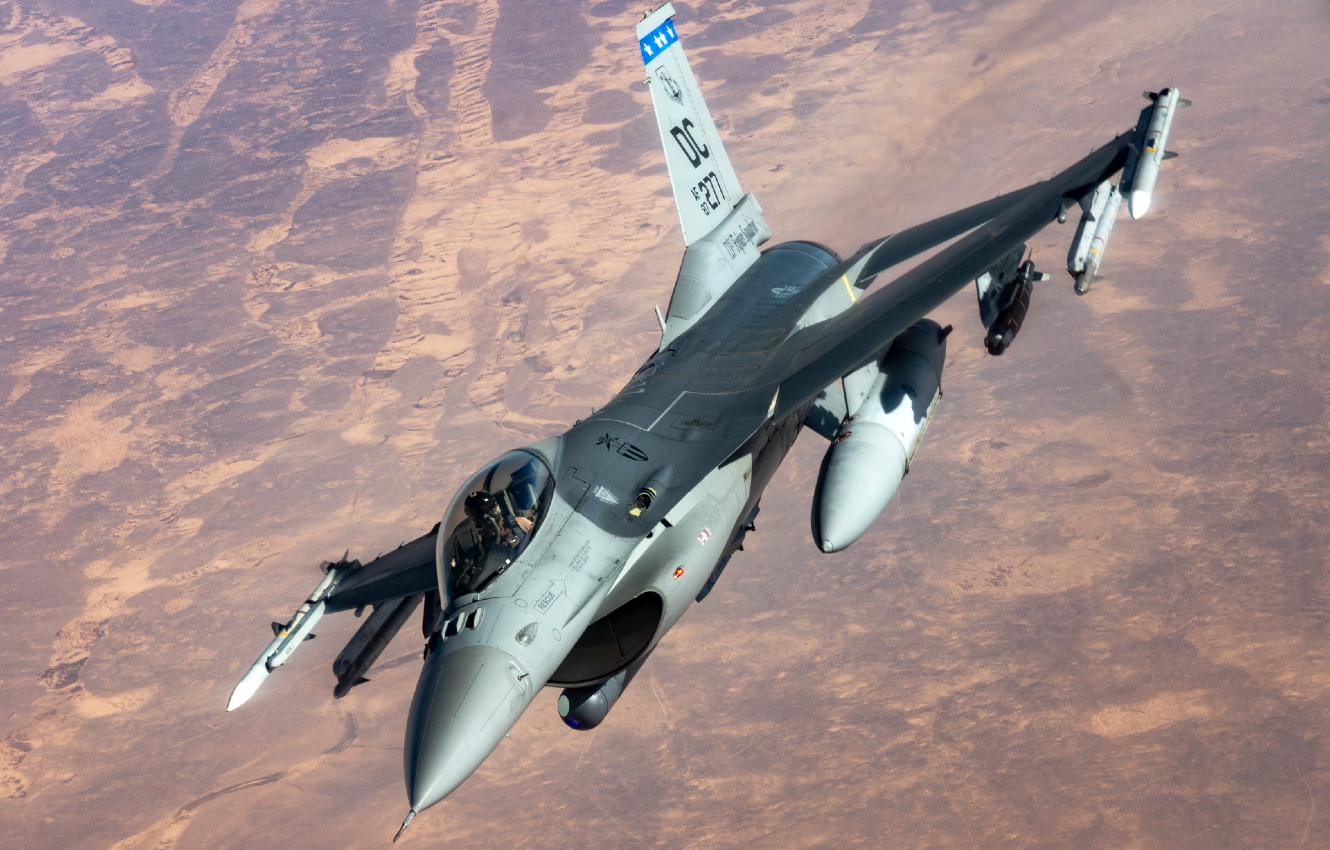
During the war in Syria, the U.S. Air Force participated in operations it rarely trained for. Russian fighter aircraft regularly flew sorties across the Euphrates River toward U.S. positions, even though the two countries were not direct antagonists in the conflict. In response, U.S. fighters would — during times of tension — intercept the incoming jets and engage in maneuvers to prevent them from dropping bombs near American and partner positions on the ground. Despite a deconfliction mechanism between Moscow and Washington to manage air operations, this type of incident has been a fairly common occurrence in Syrian airspace from 2016 to the present.

While the risk of uncontrolled escalation between the two powers remained low throughout most of the conflict, this was the first time that Western and Russian pilots have routinely flown so close to one another in combat since the 1973 Arab-Israeli war in  Sinai. The air war in Syria is a great example of what great-power competition may actually look like in scenarios short of officially declared combat: urbanized and chaotic. Russian aerial operations, including how Moscow sought to shape broader opinion about the conflict, highlight how great powers may choose to use force in peripheral conflicts that challenge American interests, but not the U.S. conventional military directly.


As the U.S. Air Force prepares for conflict with Russia and China, its interactions with Russian forces in Syria offer valuable lessons about the “urbanization” of aerial combat and its operational and tactical nuances. First, great-power conflict may not result in direct combat, but instead involve each country fighting for strategic leverage in third countries using a mixture of airpower and elite ground forces. Second, powers hostile to the United States may try to complicate U.S. action in ways that fall below the threshold of officially declared war, but which skirt the line of hostile action and complicate how U.S. forces may use force in dense and complicated combat environments. Third, U.S. Air Force training scenarios do not fully account for the complexity of an air war resembling the American experience in Syria. As a result, assumptions about how adversaries may challenge U.S. interests with airpower should be updated beyond linear notions of Joint Forcible Entry, even while training for a high-end fight continues to ensure that U.S. pilots retain critical advantages over adversary nations.

The Challenge in Syria: Non-Hostile Adversaries

Syria was often downplayed as a “permissive” environment for air operations because friendly forces were not kinetically engaged by enemy air defenses. Nevertheless, the Air Force faced an almost impossibly complex situation operating in Syrian airspace. U.S. aircraft were flying in proximity to Russian jets, often in support of different ground actors, but with rules of engagement that did not classify the Russian Aerospace Forces as a hostile adversary. These interactions were also taking place within the “no escape zone” of both Russian air-to-air weapons and the relatively intact Syrian integrated air defenses. In short, the delineation between permissive and non-permissive was purely academic.

The United States and its coalition partners also chose not to degrade or disable the Syrian regime’s integrated air defense system, which remained potent throughout the war and used to fire at Israeli aircraft, but rarely used to target American or coalition pilots. To make matters even more complicated, the Russians improved Syrian air defenses with the deployment of the S-300 and S-400, raising concerns that Russian technicians and operators may be present at these sites to help operate them. The Soviet Union used this tactic during the Cold War to deter the targeting of air defense sites in third countries mired in conflict.

To manage this air environment, the United States and Russia relied upon a deconfliction mechanism to prevent midair collisions and inadvertent escalation. The ostensible barrier in Syria’s northeast separating the two forces was the Euphrates River, which at its widest point is around 1,000 feet wide. The aircraft the United States and Russia deployed to Syria can cover 1 mile in about seven seconds at normal cruising altitude and airspeed, and air-to-ground weapon release zones were often several miles from a target. A large, easy to identify object makes sense to deconflict two air forces because a river never moves and can be seen from miles away, so pilots should have little trouble adhering to territorial boundaries to help minimize risk of unintended escalation and a midair collision. However, the deconfliction mechanism did not preclude either side from crossing the river. Instead, it asked each air force to provide pre-notification for planned flights that would cross the body of water. At times, Russia would simply choose not to provide that information, or cross the river…

[ad_2]

Source link

Illinois News Today

The top of Air Force General’s favorite war movies is not about the Air Force

[ad_1]

The Air Force Top Officer has two favorite military movies, neither of which is about the Air Force. Yes, General Charles “CQ” Brown Jr., who is celebrating his first anniversary as Chief of Staff of the Air Force, said in an interview on Friday that his two favorite military films are “The Longest Day”. Invasion of Normandy by the Army’s D-Day. The 1986 classic “Top Gun” about Navy fighter pilots, not Air Force fighter pilots like Brown.

reason?By the way, “the longest day” was “the day I grew up,” Brown said. National Press Club Event.. And “Top Gun,” about Navy aviators, came out when Brown completed his undergraduate pilot training in April 1986.

“It was probably the most realistic flight movie I’ve seen, and it just left a mark on me,” said the general. “I wasn’t trained as a pilot, and I was already going to a fighter, so that was one of the things you go for’it’s pretty realistic.”

Some movie fans may disagree with the notion that “Top Gun” is a realistic portrayal of military aviation.In fact, one former Navy aviator wrote in 2020 The movie “has a lot of clinge-worthy technical errors that can cause comics as much as compliments.” But in Brown’s defense, if the year I graduated from journalism school came out with a movie about journalists as cool, volleyball studs, I think it was pretty realistic.

Lifelong fan Comic book superhero spider-man“All Spider-Man movies are on my list,” Brown added.

You might be surprised to hear that neither of the top military films of the Air Force’s top leaders includes his own branch, but it’s hard to blame him. He didn’t have many big hit Air Force movies on Friday, especially for guys like Brown who “haven’t had much time to watch movies.”

Indeed, there are many World War II movies about the times when the Air Force was still part of the Army. There is Gregory Peck’s movie “Twelve O’Clock” about a crew of puzzled bombers flying over war-torn Europe. “Command decision”, also about the bombing of Europe.And some movies about Tuskegee Airmen, A black fighter and bomber pilot who flew over Europe.

These days, “Dr. Strange Love”, many of which are done on the B-52 Stratofortress. “Iron Eagle”; a very unrealistic movie about stealing F-16 fighters. “The Last Complete Measure” for Air Force Pararescue member William H. Pissenberger, who received the Medal of Honor after his death for defending a group of soldiers detained by enemy fire in the Vietnam War.

But unfortunately, some of these rise to the same level of fame that other war movies such as “Saving Private Ryan”, “Armor-piercing shells”, and even “Top Gun” enjoy. One thing is certain, not because of the lack of stories.Like other services, the Air Force has enough stories courage When Bold Even Maverick to run for his money. For example, Air Force Brig.General Robin Olds was a very good fighter pilot in World War II and Vietnam, so the male Air Force soldiers are still Grow a mustache In March every year in honor of him.And don’t forget Technical Sergeant Leonardo MatrovichA veteran of the Vietnam War with a prominent service record who became the first gay service member to publicly publicize himself in 1975 (he was eventually expelled from service, but the Air Force is now celebrating him. increase).

Perhaps Brown himself will be the subject of such a film. In an interview with the National Press Club, club president Lisa Matthews asked who Brown wanted to play as himself. First Black Service Chief in American History.. Brown proposed actor Anthony Mackie, who will play the new Captain America in Disney’s Marvel Cinematic Universe.

“I think I’ll give him a blow,” Brown said with a smile about McKee. The two men recently chatted together for a Disney promotional interview. There McKee expressed his respect for the general.

“I sometimes meet people like General Brown, but you know,’That guy isn’t human. He’s a rock star.’ Forget that they’re real humans and light them up. Put it in. “You are not allowed to be human. “ Mackie said, About the depiction of service members. Prior to Captain America, McKee played the former Air Force Pararescue member Superhero Falcon in a Marvel movie.

Anthony Mackie
Anthony Mackie (Photo: Photo of LBJ Library by Jay Godwin /Public domain).

Speaking of Air Force Special Operations, there is a great movie about Air Force personnel whose job is to bring air support and…

[ad_2]

Source link

Israeli artillery fires toward Lebanon from a position near the northern town of Kiryat Shmona following Hezbollah rocket fire from the Lebanese side of the border, on August 6, 2021 (JALAA MAREY / AFP)

With first rocket attack in 15 years, Hezbollah risks war to test Israel

[ad_1]

The rockets fired at northern Israel on Friday were the fifth such attack from Lebanon in three months, but the first directly and openly carried out by the Hezbollah terror group since the 2006 Second Lebanon War — indicating a clear change in the dynamics on that frontier, after 15 years in which conflict bubbled just below the surface.

The Blue Line — the unofficial but internationally recognized border between Israel and Lebanon — has largely been quiet in the decade and a half since the war, with just a handful of exceptions, even as the Israel Defense Forces and Iran-backed Hezbollah continued to wage a quieter conflict with one another elsewhere, mostly in neighboring Syria.

Generally speaking, Israel has refrained from conducting strikes in Lebanon, and Hezbollah too halted rocket fire from the land of the cedars. But in recent months, that arrangement has started to break down.

During May’s conflict between Israel and terror groups in the Gaza Strip, Palestinian factions in Lebanon fired rockets at northern Israel three times, apparently with the tacit approval of Hezbollah, which maintains strict control over southern Lebanon. A Palestinian group again fired rockets at northern Israel earlier this week. In these four cases, Israel responded with limited artillery barrages. On Wednesday this was followed by a round of airstrikes on unspecified military targets in the area from which the rockets were fired. These were the first Israeli airstrikes against targets inside Lebanon since 2014.

Following the Second Lebanon War, the threat that emerged on the Lebanese border was another full-scale war. This was what the IDF trained for and worked to postpone or at least improve its chances of winning. In contrast, the situation in the Gaza Strip is far muddier: While there is a threat of large-scale conflict — such as in May or in 2014 — it is far more common for the area to see more limited attacks by Palestinian terror groups and similarly restrained retaliation by the IDF, without the situation deteriorating into all-out war.

At the beginning of this year, the IDF warned that such a dynamic was poised to emerge in Lebanon as well, with Hezbollah feeling increasingly confident that it could launch attacks directly against Israel without risking a full-scale war, one that according to Israeli military assessments would be devastating for Israel and — more so — for Lebanon.

A picture taken from Lebanon’s southern Marjayoun area shows an agricultural vehicle driving down a dirt road in the Israeli town of Metula along the border fence between the two countries on August 6, 2021 (Mahmoud ZAYYAT / AFP)

Despite the apparent emergence of this new, more aggressive stance by Hezbollah, the IDF has maintained that the terrorist militia is deterred, both out of fear of the Israeli military and due to the ongoing financial and societal crises playing out within Lebanon, as could be seen this week with rallies against the government to mark the one-year anniversary of the Beirut Port explosion.

Indeed, IDF Spokesperson Ran Kochav told reporters on Friday that the army believes the rocket attack itself “shows Hezbollah’s deterrence, as it fired at open areas.”

But there is reason to question this interpretation. Of the 19 rockets fired at northern Israel on Friday, 10 were shot down by the Iron Dome missile defense system, something that, under the IDF’s air defense doctrine, is normally only done when it appears a projectile is heading to a populated area.

While Hezbollah may not have been intentionally launching a full-scale war with its rocket attack on Friday, it seems it was certainly willing to risk one.

The IDF’s projections for how a war with Hezbollah would break out do not anticipate that the terror group would initiate such a conflict with a sudden, large-scale assault — but rather that such a conflict would kick off with some kind of attack along the border, possibly an ambush against IDF troops, as was the case in the Second Lebanon War, or a rocket or missile attack, to which Israel would respond forcefully.

This picture taken on August 6, 2021 shows a view of Israeli bombardment near the southern Lebanese village of Kfar Shouba following a rocket attack from the Lebanese side (Mahmoud ZAYYAT / AFP)

Hezbollah would then retaliate further, potentially launching large barrages of rockets at the Israeli home front and deploying its Radwan Unit, a special forces detachment that has been specifically trained to capture portions of the Galilee in order to score a public victory over Israel — however fleeting — and to delay Israel in launching its own ground invasion of southern Lebanon. Such an invasion would be necessary, IDF officers say, to take the strategic high…

[ad_2]

Source link

Warzone Cold War Season 5 Roadmap

Warzone & Cold War Season 5: Roadmap & content

[ad_1]

The official roadmap for Season 5 of Call of Duty: Warzone and Black Ops Cold War has been revealed to the community, and we have everything you need to know covered.


There is plenty of excitement brewing in the Call of Duty community right now thanks to the reveal of the Warzone and Black Ops Cold War Season 5 roadmap.

As with previous seasons, the Warzone and Cold War Season 5 roadmap gives players a picture of all of the new content they can expect to see during the new period of content for the popular games.

You can find everything you need to know about the Warzone and Cold War Season 5 roadmap below:

Warzone and Cold War Season 5 roadmap

Warzone and Cold War Season 5 roadmap

The Story So Far: Time to Execute the Mission

“This is Wraith. The Verdansk tests are looking good… that clears the way for you.”

Having emerged from the shadows with a direct assault on the Ground Station in South Africa and the de-orbiting of an American satellite constellation, Perseus continues their offensive.

Wraith hands off Dragovitch’s data, stolen from the Soviet facility on Mount Yamantau to a mysterious operative, along with details of the next phase of Perseus’s nefarious plan.

“Told you it would be easy.” – Kitsune

In the early hours of July 23rd 1984, Woods and an assault team take to the air, in response to a distress signal sent from a NATO listening station in Teufelsberg, Germany… the base has been overrun by unknown assailants.

Inside, Woods is confronted by a threat he thought long buried, a weapon from the past that could change the conflict forever…

Don’t fall to the mind games – Black Ops Cold War and Warzone Season Five comes online on August 12, following updates to Black Ops Cold War on August 10 at 9 PM PT and Warzone on August 11 at 9 PM PT. Keep reading, even though this declassified intel will almost certainly fall into the hands of double agents in our ranks….

BLACK OPS COLD WAR CONTENT:

Warzone and Cold War Season 5 roadmap

Become a Double Agent in the Newest Multiplayer Game Mode

The new Double Agent mode infiltrates into Season Five, an investigative Multiplayer party experience where each match assigns Double Agents who are there to sabotage the mission. Communicate, investigate, and expose the traitors – or successfully wipe out the investigating team – to win.

It starts with up to ten players in a lobby who are assigned one of three roles:

·      Double Agents, who must either eliminate everyone else or successfully set off explosive charges around the map.

·      The Investigator, who can use clues to target suspected Double Agents as Wanted criminals.

·      Operatives, who must work together to identify and eliminate the Double Agents before it’s too late.

Warzone and Cold War Season 5 roadmap

Each player starts with a pistol. Weapons and Equipment are introduced in the Preparing Stage, where all players can grab weapons in different parts of the map.

Each role gains access to unique skills and content during the round. Double Agents gain access to Gas Mines, Counter Spy Planes, Combat Bows, and Attack Helicopters, and also have protection from the radiation spreading from the bombs they’ve set.

Investigators gain access to Trophy Systems, Stimshots, and Hand Cannons, and can see the footprints of an attacker when examining a player’s death location. Investigators can also issue a Wanted Order on a player that they find to be suspicious.

Voice chat is strongly encouraged, and this party mode can be played with the wider community or up to nine of your best friends. Hopefully, they can still be considered your closest allies at the end of the operation.

Warzone and Cold War Season 5 roadmap

Demolition Returns In-Season

Later in Season Five, the classic Demolition game mode makes its debut in Black Ops Cold War.

Two teams battle it out as attackers attempt to destroy a pair of active bombsites, while defenders must prevent the detonations. All-out chaos ensues when time is extended after the first bomb site is destroyed, and you’d better be prepared with plenty of Scorestreaks and squadmates for backup should one final bomb be planted at the last second.

Five Fresh Multiplayer Maps

Prepare to seek and destroy Double Agents – and execute missions across a variety of Multiplayer modes – in a collection of locales both fresh and familiar, especially to true veterans of the Black Ops series.

Warzone and Cold War Season 5 roadmap

Echelon (6v6, Launch)

In this brand-new map seen in the Season Five intro cinematic, you’ll need to keep your ear to the ground if you want to leave this listening station alive.

Set at Teufelsberg – also known as “Devil’s Mountain” – in Berlin, Echelon sees Operators fighting through the rain and ash in the aftermath of Perseus’ latest operation. From either infiltration point, you’ll fight to control the central control room inside the main dome, a natural hotbed for combat that gets even hotter in objective game modes.

This NATO compound was partially blown to pieces during the attack, so mind the gaps in the roofs unless you’re planning to…

[ad_2]

Source link