Posts

The Globe and Mail

Canadian special forces may be used to rescue Afghan interpreters, support staff from Kabul: Sajjan

[ad_1]

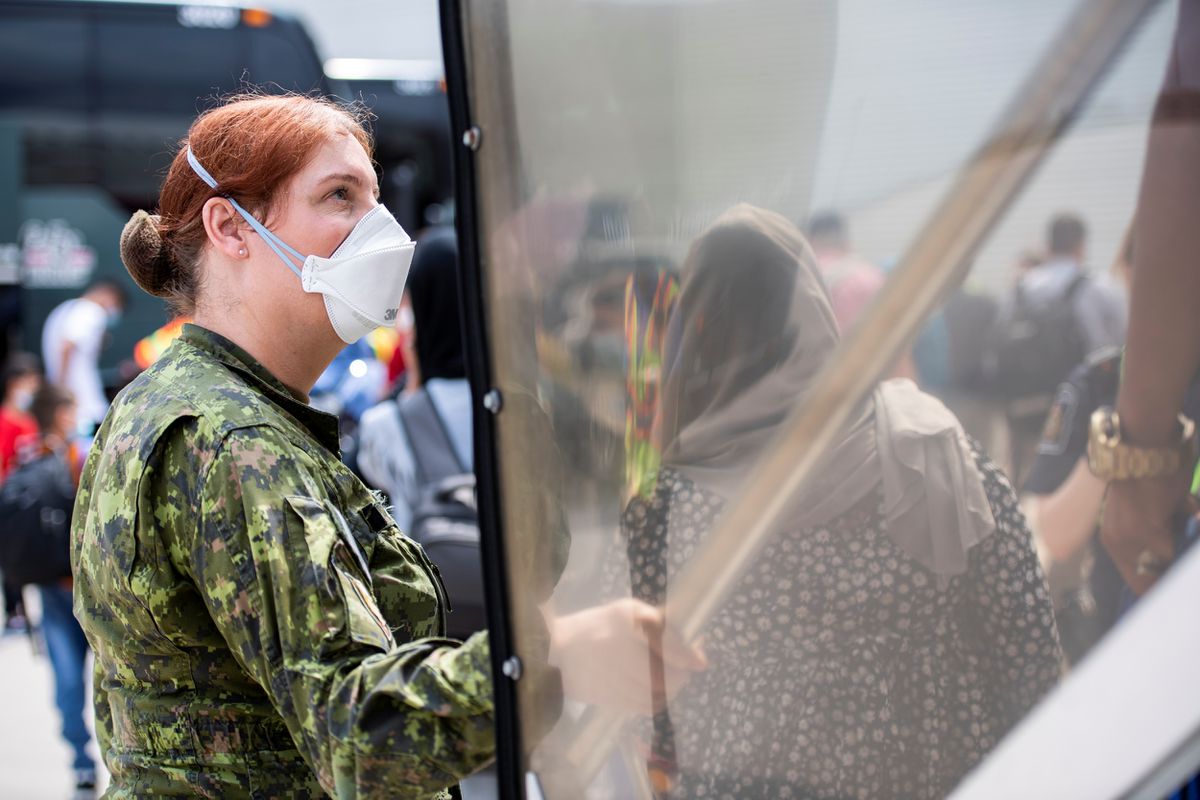
A Canadian Armed Forces Medic assists Afghan refugees who supported Canada’s mission in Afghanistan disembarking a CC-150 Polaris aircraft at Toronto Pearson International Airport in Mississauga, Ontario, Canada August 13, 2021.

CPL RACHAEL ALLEN/DND/Reuters

Defence Minister Harjit Sajjan says Canadian special forces have been given the “flexibility” to rescue Canadians and former Afghan support staff and bring them to the safety of the Hamid Karzai airport in Kabul for evacuation flights to Canada.

The United States has come under criticism for refusing to send U.S. troops outside the security of the airport perimeter even though British and French special forces have carried out rescue missions in Kabul.

The British and French put their special forces into action because of reports of Taliban hunting down former Afghan interpreters and fixers. Afghans attempting to flee have also faced difficulty getting through a network of Taliban checkpoints lining the route to the airport.

Story continues below advertisement

Jagmeet Singh says election timing may have impeded Canada’s Afghanistan response

Fearing reprisals, Afghans rush to scrub digital presence after Taliban takeover

Crush at Kabul airport kills seven; Afghan fighters seize areas from Taliban

At a news conference Sunday, Mr. Sajjan said that Canadian special forces are empowered to do what is necessary to get people safely to the airport.

“For obvious reasons, I cannot divulge the situation of exactly what our troops are doing. But one thing I can say is that they have all the flexibility to be able make the appropriate decisions so they can take actions,” he said.

Immigration Minister Marco Mendicino also told the same news conference that “all of our forces have the full operational discretion to take whatever actions are necessary to get as many people into the airport on to those flights.”

Speaking at a campaign event in Miramichi, N.B., Prime Minister Justin Trudeau said the Defence Minister briefed him several days ago on potential operational measures to get as many people as possible out of Afghanistan.

“I don’t want to go into details, operational details right now. But I can assure you we have given the authorizations for the folks on the ground to make the right decisions to help as many people as possible given the risks,” he said.

The Pentagon has said the 5,200 U.S. forces on the ground in Afghanistan are not authorized to go outside the perimeter of the airport. Hundreds of desperate Afghans have stormed the terminal and tarmac of the facility, hoping to catch evacuation flights out.

Mr. Sajjan said there have been “many, many opportunities where people in the Canadian Armed Forces have been able to get Canadian citizens and Afghan nationals to safety.

Story continues below advertisement

“Ever single time they took the opportunity, they have weighed the risk.”

A senior government official said the minister was referring to Canadian special forces efforts at the airport and not any rescue mission in the capital where armed Taliban militants are patrolling the streets. The Globe is not identifying the official, who was not authorized to discuss operation details.

Pressed on the risk and the type of mounting rescue operations in Kabul, such as using helicopters or buses, Mr. Sajjan said that he is “not discounting anything.”

“I have to be very careful what I say about what they are doing, even the possibility of doing something because you never know when an opportunity may come up and an action that they have to take,” he said.

Not Left Behind, a group of Canadian veterans and volunteers trying to get former Afghan interpreters and support staff out of Afghanistan, has been particularly critical of Canada’s handling of the evacuation operations.

“While other countries have taken steps to help their citizens safely travel to the Kabul airport, Canadian applicants have been told to fend for themselves,” the group said in a statement Sunday. “We need to help Afghans safely reach the Kabul airport.”

Story continues below advertisement

Chaos persists outside Kabul airport The Associated Press

The government announced Sunday that just over 1,100 people have been airlifted out of Kabul with 121 flown out Saturday aboard Canadian Forces Globemaster aircraft.

Although there have been complaints from people going to the airport that they have not been able to find any Canadian Forces personnel, Mr. Sajjan insisted soldiers are present at all the entry points.

Mr. Mendicino acknowledged the significant challenges of exiting the country facing expatriates and former Afghan interpreters and fixers who worked for Canada. Taliban checkpoints on the road to Kabul’s airport “makes getting this done perilous.”

He urged people in safe houses to wait until they received either a phone call or text to proceed to the airport.

After the fall of Kabul…

[ad_2]

Source link
staff sgt nick jones

MARSOC Marine to receive Navy Cross for rescue during ISIS gunfight in Iraq

[ad_1]

An elite Marine Raider will be awarded the Navy Cross later this month for repeatedly exposing himself to heavy enemy fire last year while trying to rescue several wounded teammates during a six-hour gun battle with ISIS militants in Iraq.

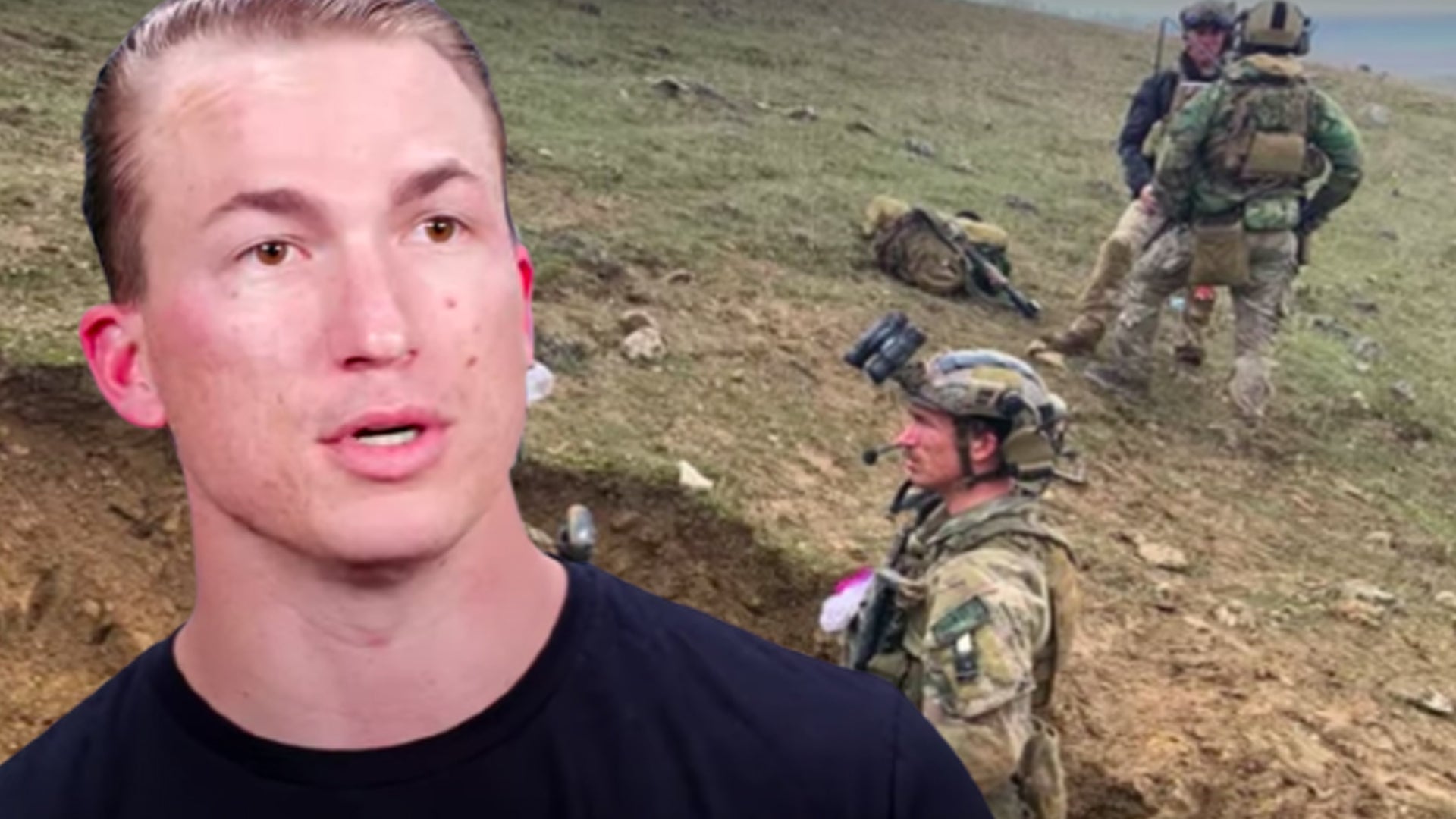
Staff Sgt. Nicholas J. Jones, 29, was one of more than a dozen special operations Marines with the 2nd Marine Raider Battalion who were accompanying Iraqi security forces attempting to “clear enemy cave bunkers” in the mountains of Northern Iraq on March 8, 2020, when his team leader, team chief, and a French special operator were wounded by an initial volley of heavy gunfire from “multiple barricaded” fighters, according to the citation for Jones’ Navy Cross award, which is second only to the Medal of Honor and recognizes “extraordinary heroism in combat.” 

Marine Commandant Gen. David Berger will present the award to Jones on August 26 at Camp Lejeune, North Carolina.

The valor award stems from an early morning operation to clear militants near the town of Makhmur in the country’s Kurdistan region. Just after 7 a.m. local time, warplanes pounded positions in an ISIS stronghold in the rugged Qarachogh mountains before commandoes rappelled from helicopters and quickly found themselves in a ”brutal gun battle” against an estimated 15 to 30 fighters in a “well-defended cave complex,” according to The New York Times and other media reports. The insurgent group put “considerable effort” into building “vast rural tunnel networks” in the mountains after the fall of its self-proclaimed caliphate in March 2019, according to the Combating Terrorism Center at West Point.

“We were tasked with doing a cave clearance in Northern Iraq,” Jones said in a video recalling the incident. “Hell just opens up behind me. Chaos. And then, the next second, there’s an eagle down,” meaning an American special operator was wounded.

This hero special ops Marine ran through gunfire to save wounded teammates in Iraq
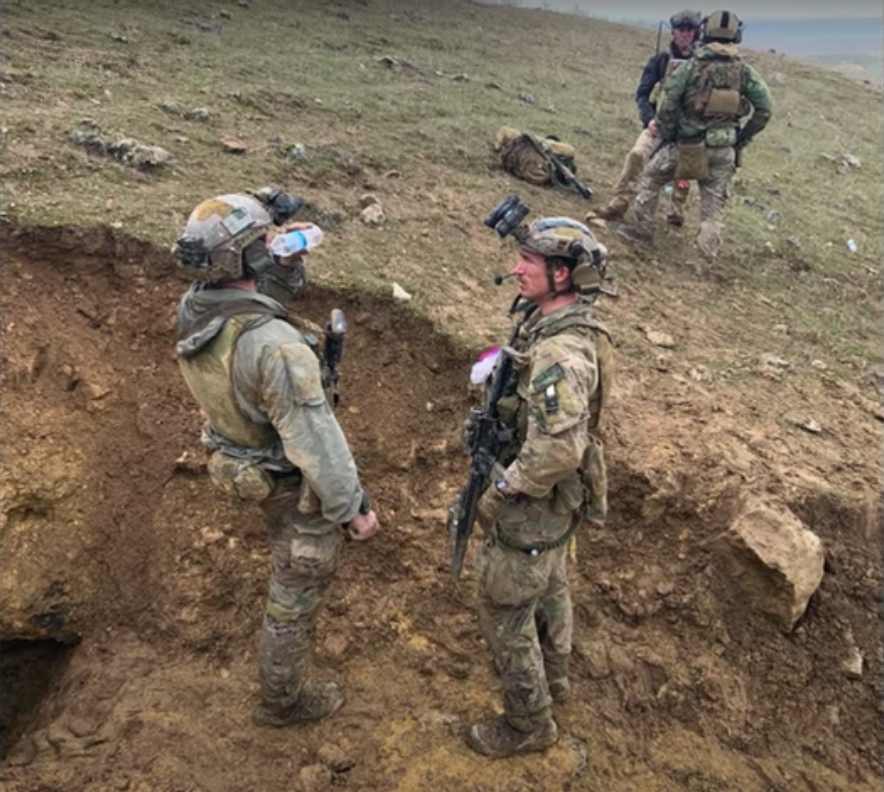
Marine Raiders in Iraq (Photo: Youtube/Talons Reach Foundation)

“The Daesh fighters popped out of one entrance and killed the two Americans. They dragged their bodies into the cave complex,” an Iraqi officer told The Los Angeles Times, using a disparaging term for the Islamic State. “It was a big firefight, one of the most intense we’ve faced in this period.”

Jones quickly moved to aid the French operator soon after the gun battle started despite “sustained and intense close range enemy fire” from less than 100 feet away, according to the Raider’s award citation. Using his rifle and throwing grenades, Jones then helped the wounded French operator get behind cover and to medical evacuation. The operator ultimately survived.

The Olathe, Kansas native then turned his attention to the wounded leaders of Marine Special Operations Team (MSOT) 8232, Capt. Moises Navas, and Gunnery Sgt. Diego Pongo, both 34, and again exposed himself to heavy machine-gun fire while trying to reach them after they fell into a steep ravine, according to the award citation. Jones tossed grenades into the caves and fired his rifle in a “valiant” attempt to reach his teammates, though both died from their wounds. 

“I just knew that they wouldn’t have quit for me so I’m not going to quit,” Jones said.

This hero special ops Marine ran through gunfire to save wounded teammates in Iraq
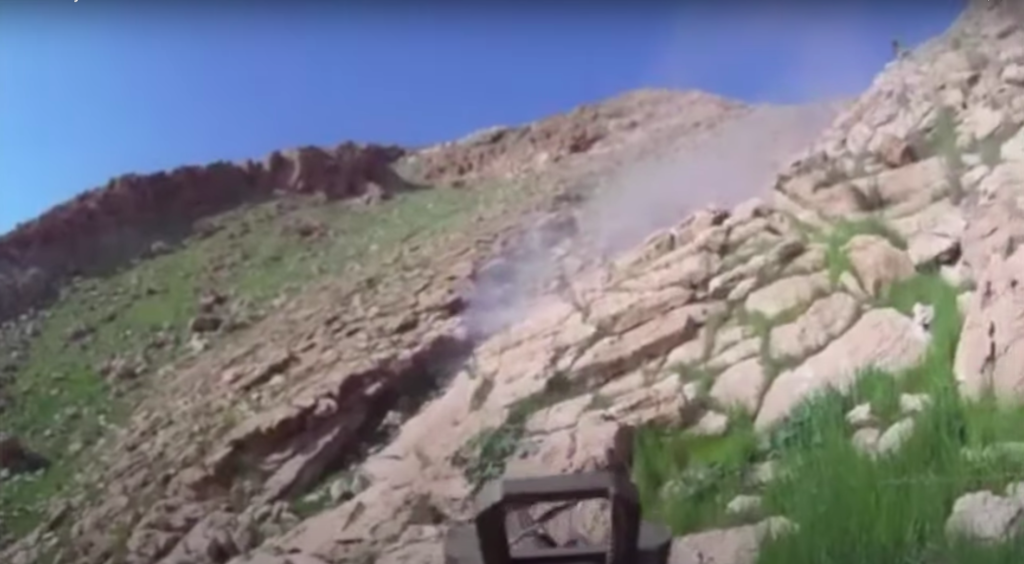
A screenshot from helmet camera footage of the battle. (Photo: YouTube/Talons Reach Foundation)

“Disregarding the rounds impacting all around him, he continued engaging the enemy with rifle fire and grenades until he was driven back by the heavy volume of enemy fire,” the citation says. “Several hours into the pitched battle, he mounted a third attack on the enemy but sustained a gunshot to the leg.” Jones recalled the enemy round that went into his right shin felt like “being smacked by a baseball bat.”

Jones, a tactical element leader in charge of several Marines, refused medical treatment and “continued fighting until forcibly evacuated” from the battlefield, the citation said. A helicopter hoisted him off the mountain.

Jones, who went through a “long and grueling recovery process” from his wound, was medically retired from the Corps in 2020, according to the website of a nonprofit he founded, the Talons Reach Foundation.

https://www.youtube.com/watch?v=uKwF6BYrcr0

‘Both men epitomize what it means to be a Marine Raider’

The deaths of two Marine Raiders in the mountains of Iraq in March 2020 sent shockwaves through a close-knit Marine special operations community that was still grieving the loss of an enlisted Raider killed in August 2019.

“The loss of these two incredible individuals is being felt across our organization,” said Col. John Lynch, commanding officer of the Marine Raider Regiment. “But it cannot compare to the loss that their families and teammates are experiencing. Both men epitomize what it means to be a Marine Raider. They were intelligent, courageous, and loyal. They were dedicated leaders, true…

[ad_2]

Source link