Posts

Marine Special Ops Command Hones its ‘Cognitive Raiders’

Marine Special Ops Command Hones its ‘Cognitive Raiders’

[ad_1]

Marine Special Ops Command Hones its ‘Cognitive Raiders’


9/7/2021


By
Scott R. Gourley


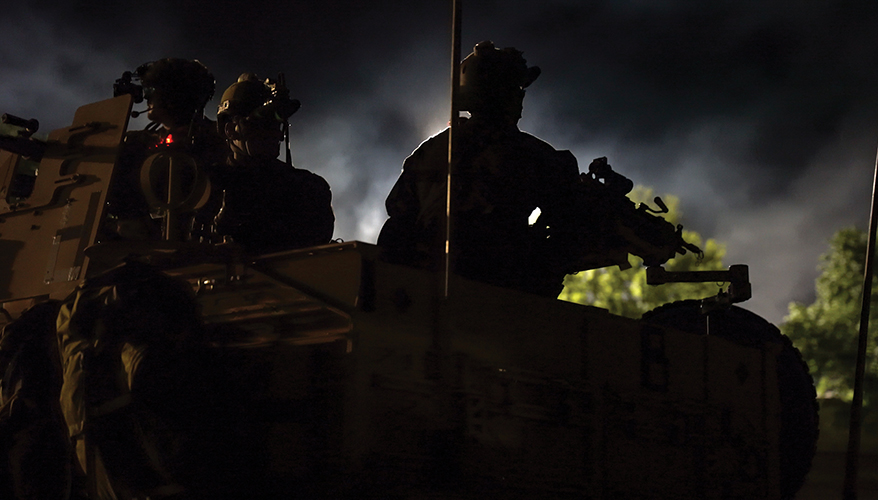
Marine Raiders provide security during a readiness exercise.

Marine Corps photo by Cpl. Brennan Priest

Marine Raiders are some of the nation’s most elite warfighters, but Marine Corps Special Operations Command is pushing to make them even better with its “Cognitive Raider” initiative.

The Marine Corps Special Operations Forces 2030 strategic vision outlined the Cognitive Raider innovation pathway, asserting that troops sent into future special operations environments “must be able to understand them and then adapt their approaches across an expanded range of solutions,” adding, “While tough, close-in, violent actions will remain a feature of future warfare, MARSOF must increasingly integrate tactical capabilities and partnered operations with evolving national, theater and interagency capabilities across all operational domains, to include those of information and cyber.”

To facilitate that understanding and adaptation, MARSOC has implemented an annual event called the Cognitive Raider Symposium, also known as CRS. Co-hosted with the Naval Postgraduate School’s Defense Analysis Department, the multi-day gatherings provide myriad learning venues designed to hone the Marine Raiders’ tactical edges. Significantly, the symposium not only addresses the Cognitive Raider pathway, but also illustrates MARSOF as a true connector of ideas and concepts.

Opening the third iteration of the symposium in early June, Col. John Lynch, MARSOC deputy commander, identified several key traits that help to define a Cognitive Raider, offering, “It starts with being a problem solver, one that never becomes complacent but instead remains adaptable and forward thinking.”

He described an “edge” where the Marine Raider asserts, “I’m not satisfied. There is more out there. There are ways to be better. There are ways to be more efficient. There are ways to be more lethal. And there are better ways to accomplish what we’re trying to accomplish.

“I cannot pick a single period of time in my career … where we have been challenged to evolve at the pace we’re being challenged to evolve right now,” he added. “It is remarkable how fast we have to do it.”

Douglas Borer, chair of the Defense Analysis Department at the Naval Postgraduate School, noted the conference’s focus on “frontier technologies,” offering both low-tech and high-tech examples while discussing how the technologies might alter tactical and strategic realities against a background of great power competition with nations such as China and Russia.

“When I asked what frontier technologies a Cognitive Raider mostly followed, the list included things like automation, AI, advanced manufacturing, biotech, quantum computing, 5G, next-gen hardware robotics and space,” said Matt Stafford, a State Department representative. “These largely follow State’s concerns. I know we both have much longer lists that we’re also paying attention to, but it’s good to hear that we share these worries. We also share some of your background worries about how these things will get used, or combined with each other, or just combined with existing technologies.”

Master Gunnery Sgt. Mark Castille, command senior enlisted leader at the Marine Raider Training Center, engaged conference participants with a presentation focused on critical thinking tools and methods, capping the discussion with a participatory creative thinking exercise for attendees.

The CRS series brings in speakers from diverse and unique backgrounds. This approach was reflected in presentations by writers and analysts P.W. Singer and August Cole, co-authors of the novel Ghost Fleet, which has appeared on the Commandant of the Marine Corps’ Professional Reading List.

Singer noted that he had been asked to speak on the topic “What comes next?” adding, “There is a challenge in that, particularly to the defense space, where the belief is that wrestling with the future is something that we shouldn’t do, because we get it wrong so often.”

Against that caveat, Singer discussed the implications of China’s 19th Party Congress’ order for the Chinese military to “accelerate the development of military ‘intelligentization.’”

“We need to use new modes…

[ad_2]

Source link
staff sgt nick jones

MARSOC Marine to receive Navy Cross for rescue during ISIS gunfight in Iraq

[ad_1]

An elite Marine Raider will be awarded the Navy Cross later this month for repeatedly exposing himself to heavy enemy fire last year while trying to rescue several wounded teammates during a six-hour gun battle with ISIS militants in Iraq.

Staff Sgt. Nicholas J. Jones, 29, was one of more than a dozen special operations Marines with the 2nd Marine Raider Battalion who were accompanying Iraqi security forces attempting to “clear enemy cave bunkers” in the mountains of Northern Iraq on March 8, 2020, when his team leader, team chief, and a French special operator were wounded by an initial volley of heavy gunfire from “multiple barricaded” fighters, according to the citation for Jones’ Navy Cross award, which is second only to the Medal of Honor and recognizes “extraordinary heroism in combat.” 

Marine Commandant Gen. David Berger will present the award to Jones on August 26 at Camp Lejeune, North Carolina.

The valor award stems from an early morning operation to clear militants near the town of Makhmur in the country’s Kurdistan region. Just after 7 a.m. local time, warplanes pounded positions in an ISIS stronghold in the rugged Qarachogh mountains before commandoes rappelled from helicopters and quickly found themselves in a ”brutal gun battle” against an estimated 15 to 30 fighters in a “well-defended cave complex,” according to The New York Times and other media reports. The insurgent group put “considerable effort” into building “vast rural tunnel networks” in the mountains after the fall of its self-proclaimed caliphate in March 2019, according to the Combating Terrorism Center at West Point.

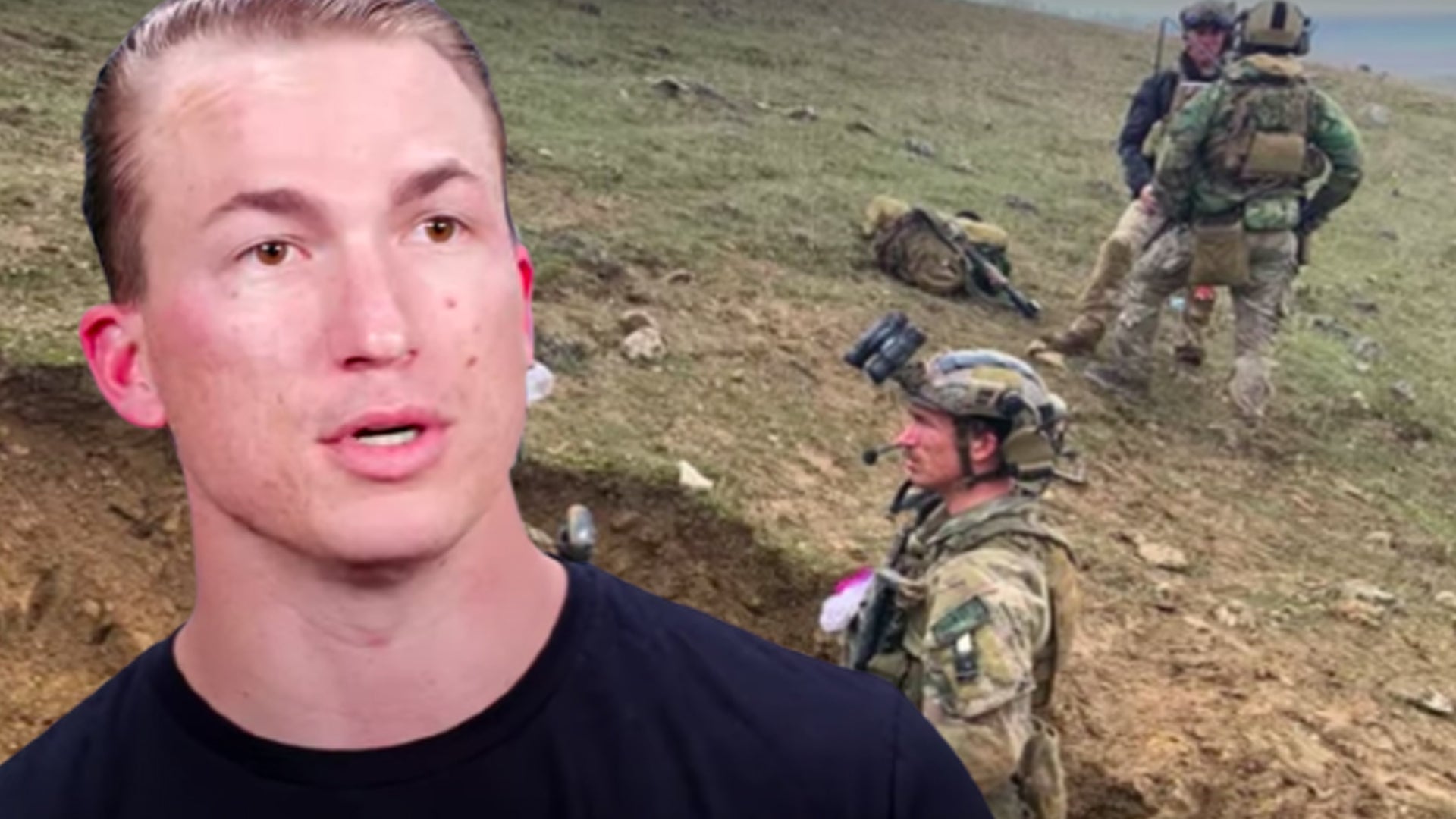
“We were tasked with doing a cave clearance in Northern Iraq,” Jones said in a video recalling the incident. “Hell just opens up behind me. Chaos. And then, the next second, there’s an eagle down,” meaning an American special operator was wounded.

This hero special ops Marine ran through gunfire to save wounded teammates in Iraq
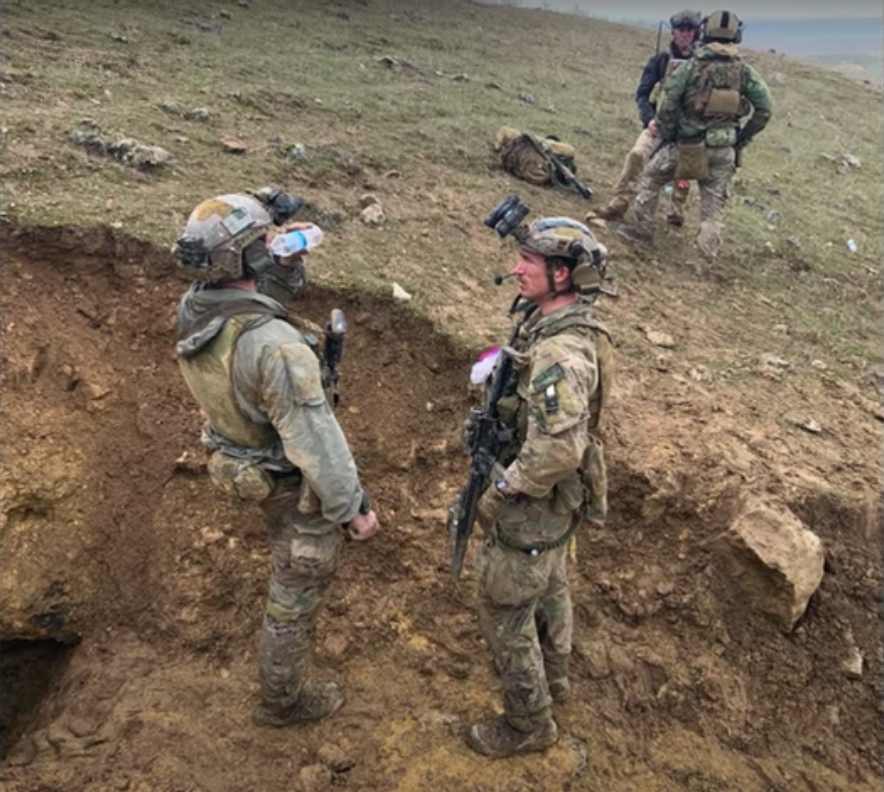
Marine Raiders in Iraq (Photo: Youtube/Talons Reach Foundation)

“The Daesh fighters popped out of one entrance and killed the two Americans. They dragged their bodies into the cave complex,” an Iraqi officer told The Los Angeles Times, using a disparaging term for the Islamic State. “It was a big firefight, one of the most intense we’ve faced in this period.”

Jones quickly moved to aid the French operator soon after the gun battle started despite “sustained and intense close range enemy fire” from less than 100 feet away, according to the Raider’s award citation. Using his rifle and throwing grenades, Jones then helped the wounded French operator get behind cover and to medical evacuation. The operator ultimately survived.

The Olathe, Kansas native then turned his attention to the wounded leaders of Marine Special Operations Team (MSOT) 8232, Capt. Moises Navas, and Gunnery Sgt. Diego Pongo, both 34, and again exposed himself to heavy machine-gun fire while trying to reach them after they fell into a steep ravine, according to the award citation. Jones tossed grenades into the caves and fired his rifle in a “valiant” attempt to reach his teammates, though both died from their wounds. 

“I just knew that they wouldn’t have quit for me so I’m not going to quit,” Jones said.

This hero special ops Marine ran through gunfire to save wounded teammates in Iraq
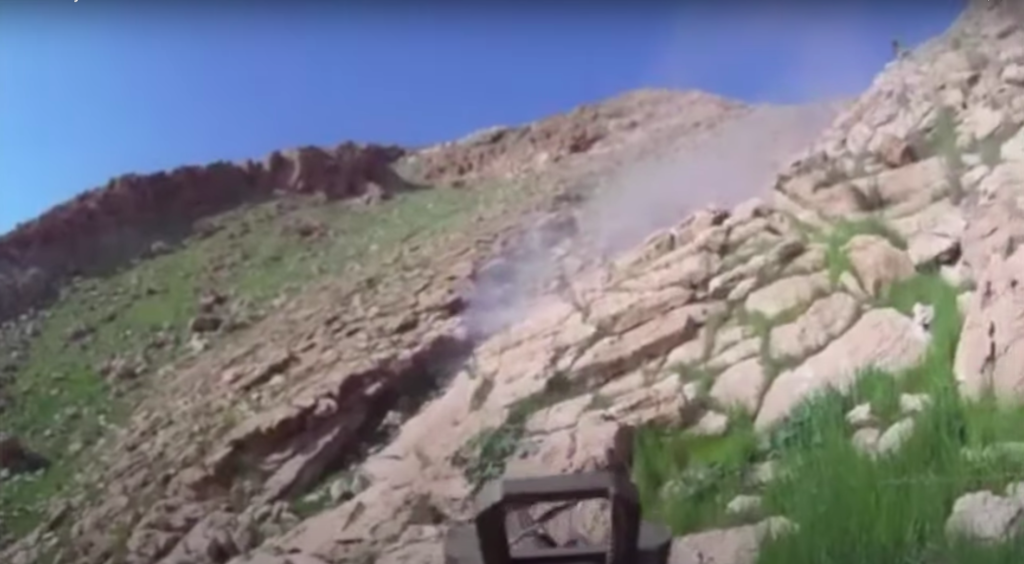
A screenshot from helmet camera footage of the battle. (Photo: YouTube/Talons Reach Foundation)

“Disregarding the rounds impacting all around him, he continued engaging the enemy with rifle fire and grenades until he was driven back by the heavy volume of enemy fire,” the citation says. “Several hours into the pitched battle, he mounted a third attack on the enemy but sustained a gunshot to the leg.” Jones recalled the enemy round that went into his right shin felt like “being smacked by a baseball bat.”

Jones, a tactical element leader in charge of several Marines, refused medical treatment and “continued fighting until forcibly evacuated” from the battlefield, the citation said. A helicopter hoisted him off the mountain.

Jones, who went through a “long and grueling recovery process” from his wound, was medically retired from the Corps in 2020, according to the website of a nonprofit he founded, the Talons Reach Foundation.

https://www.youtube.com/watch?v=uKwF6BYrcr0

‘Both men epitomize what it means to be a Marine Raider’

The deaths of two Marine Raiders in the mountains of Iraq in March 2020 sent shockwaves through a close-knit Marine special operations community that was still grieving the loss of an enlisted Raider killed in August 2019.

“The loss of these two incredible individuals is being felt across our organization,” said Col. John Lynch, commanding officer of the Marine Raider Regiment. “But it cannot compare to the loss that their families and teammates are experiencing. Both men epitomize what it means to be a Marine Raider. They were intelligent, courageous, and loyal. They were dedicated leaders, true…

[ad_2]

Source link