DVIDS – News – 123rd Airlift Wing earns 19th Air Force Outstanding Unit Award
[ad_1]
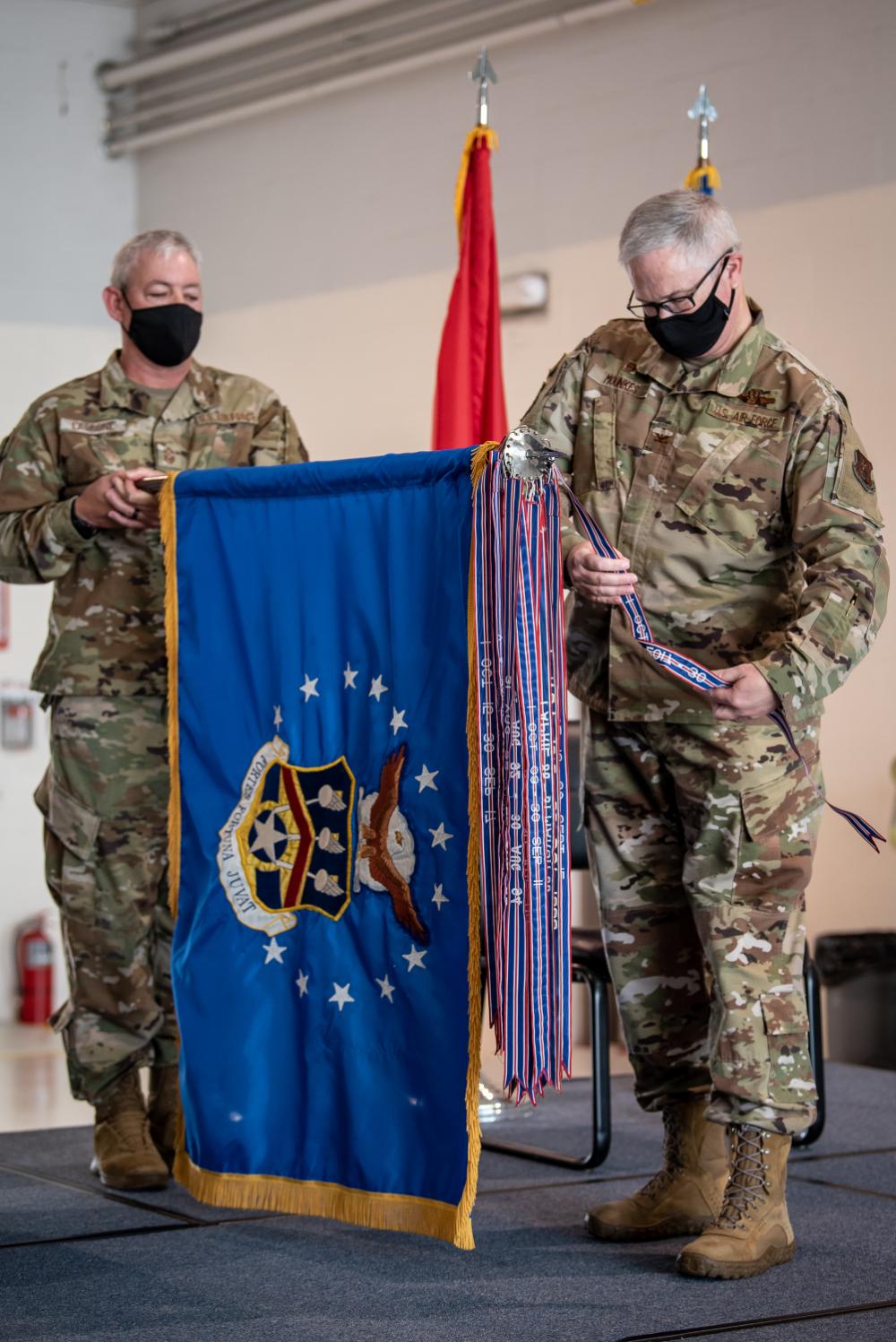
The Kentucky Air National Guard’s 123rd Airlift Wing received its 19th Air Force Outstanding Unit Award during a ceremony here Saturday, maintaining a lengthy record as the most decorated airlift unit in the U.S. Air Force.
The coveted honor, bestowed annually on the top 10 percent of units, recognizes excellence in mission performance, deployments, readiness, inspections and community engagement.
The latest award is the Louisville-based wing’s seventh consecutive AFOUA. Only a handful of units across the Air Force have earned 19 such honors, and no other airlift unit has equaled the feat.
“You know, this sure as heck isn’t the first time we’ve (presented this award), and I trust it’s not going to be the last time, either,” said Kentucky’s adjutant general, Brig. Gen. Hal Lamberton, just prior to bestowing the honor during a ceremony at the Kentucky Air National Guard Base.
Lamberton spoke of the wing’s nearly 75-year history of achievement, noting that its mission and aircraft have changed many times, from fighter planes and aerial defense to reconnaissance, then airlift.
“But it’s not about the equipment,” Lamberton said. “It’s about you guys. It’s the quality of folks that we’ve got in the wing. It’s the quality of the men and women doing the jobs that you do — doing it here, doing it overseas — virtually every day.
“I’m honored to be part of this recognition this morning, as we add another streamer to your guidon.”
The 123rd Airlift Wing, which flies the C-130 Hercules transport aircraft, earned the award for exceptional performance across a broad spectrum of operations, from homeland disaster response to the overseas war effort, between Oct. 1, 2017 and Sept. 30, 2019. During that period, the wing deployed 53 percent of its Airmen to 34 locations in 21 countries, two territories and five geographic commands, many in harm’s way, for a total of 78,455 days in support of Operations Noble Eagle, Freedom’s Sentinel, Inherent Resolve and Spartan Shield.
In addition to participating in numerous exercises with U.S and multinational forces across Europe — including the 75th-anniversary re-enactment of D-Day in France — the 123rd Airlift Wing deployed scores of Airmen and multiple aircraft to the Persian Gulf region, where they flew more than 2,300 sorties to deliver 22,350 troops and 7,447 tons of cargo to destinations across the U.S. Central Command Area of Responsibility.
The wing’s Special Tactics Airmen also augmented active-duty Special Forces in Iraq and Syria during a five-month deployment, conducting 40 joint special operations missions and providing command and control for multiple surveys in enemy territory.
The Special Tactics Airmen were active in the United States as well, mobilizing a 10-person team to Virginia to establish a coordination cell for the recovery of victims following Hurricane Florence, reducing response time by 50 percent.
The wing’s 123rd Medical Group was heavily engaged at home, too. The unit served as the lead agency for a field exercise in rural Eastern Kentucky involving 200 medical and dental troops from across the U.S. military. Working from field clinics established at four high schools in medically underserved communities, the team performed 11,275 medical and dental procedures for 2,662 patients, providing more than $1 million in care and eyeglasses at no costs to residents.
The wing’s Airmen also distinguished themselves with multiple individual honors during the award period. Among them, Lt. Col. J.T. Hourigan was awarded the Distinguished Flying Cross for exceptional airmanship by saving a C-130 aircraft and multiple lives following a catastrophic in-flight mechanical failure; and Tech. Sgt. Daniel Keller earned the Air Force Cross for gallantry in action on an Afghan battlefield — one of only 10 bestowed Air Force-wide since 9/11.
Both honors were presented by the Air Force chief of staff during ceremonies held at the Kentucky Air National Guard Base in Louisville.
The wing completed yet another four-month deployment to the Persian Gulf in November, during which its aircrews flew 4,948 combat sorties to deliver 15,000 passengers and 10,158 tons of supplies to locations across U.S. Central Command.
The wing’s Airmen currently are providing administrative support to Coronavirus vaccination sites across Kentucky as part of the Commonwealth’s response to the COVID-19 crisis.
| Date Taken: | 08.07.2021 |
[ad_2]
Source link