
Posts

Ethiopia denies attack on Sudan, blames rebels for violence | News

Ethiopia denies attack on Sudan, blames rebels for violence | News

[ad_1]

Ethiopian government spokesman dismisses Sudanese claims that the military had attacked Sudan as ‘groundless’.

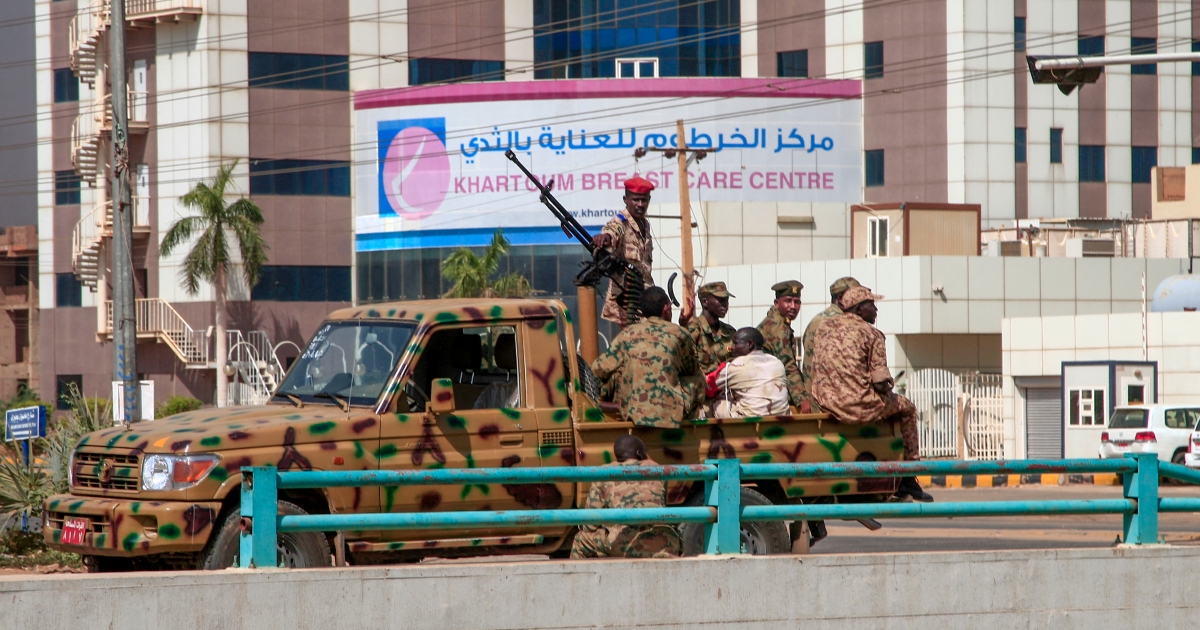
Ethiopia has denied it staged an attack over the weekend along its shared border with Sudan, blaming unrest in the disputed zone on rebels from its war-hit Tigray region.

On Saturday, Sudan’s military said “several” soldiers had been killed in an attack by armed groups and militias linked to the Ethiopian military in the fertile expanse known as Al-Fashaqa.

The area has long been a source of tension between Addis Ababa and Khartoum, sparking deadly clashes over the last year.

But in comments that aired on state media on Sunday, Ethiopian government spokesman Legesse Tulu dismissed claims the military had attacked Sudan as “groundless”.

Instead, he blamed the violence on the Tigray People’s Liberation Front (TPLF), the fighter group that has been locked in a gruesome war against Prime Minister Abiy Ahmed’s government since November 2020 and claims to be approaching the capital Addis Ababa.

“A large group of insurgents, bandits and terrorists had entered [from Sudan],” Legesse said in comments aired by the Ethiopian Broadcasting Corporation, without providing evidence.

“The Ethiopian National Defence Force and the local militia have destroyed them,” he added.

Legesse also said the TPLF was training in Sudan and receiving support from unspecified “foreign backers”.

The land in Al-Fashaqa has for years been cultivated by Ethiopian farmers, though Sudan claims it falls within its territory.

In November 2020, around the time Abiy sent troops into Tigray to remove the TPLF, Khartoum stationed troops in Al-Fashaqa, a move Addis Ababa has described as an invasion.

‘Peaceful solution’

Yet Legesse said Ethiopia was keen to resolve the matter peacefully.

“The Ethiopian National Defence Force doesn’t have an agenda to open an attack on any sovereign country,” he said, referring to the military.

“There is land that the Sudanese forces have invaded. The government is sitting down to resolve [the dispute] in a peaceful process, through dialogue and negotiation.”

The war in northern Ethiopia has killed thousands of people and driven hundreds of thousands more into famine-like conditions, according to the United Nations estimates.

Last week, Abiy, winner of the 2019 Nobel Peace Prize, announced he would head to the front to lead operations against the TPLF.

On Sunday, state media reported that the military and special forces from the Afar region had taken control of the town of Chifra.

The area around Chifra has been the site of fierce fighting in recent weeks, with the TPLF apparently trying to seize control of a critical highway that brings goods into Addis Ababa.

A TPLF source disputed the state media report on Monday, saying “active fighting is going on”.


[ad_2]

Source link

Israeli artillery fires toward Lebanon from a position near the northern town of Kiryat Shmona following Hezbollah rocket fire from the Lebanese side of the border, on August 6, 2021 (JALAA MAREY / AFP)

With first rocket attack in 15 years, Hezbollah risks war to test Israel

[ad_1]

The rockets fired at northern Israel on Friday were the fifth such attack from Lebanon in three months, but the first directly and openly carried out by the Hezbollah terror group since the 2006 Second Lebanon War — indicating a clear change in the dynamics on that frontier, after 15 years in which conflict bubbled just below the surface.

The Blue Line — the unofficial but internationally recognized border between Israel and Lebanon — has largely been quiet in the decade and a half since the war, with just a handful of exceptions, even as the Israel Defense Forces and Iran-backed Hezbollah continued to wage a quieter conflict with one another elsewhere, mostly in neighboring Syria.

Generally speaking, Israel has refrained from conducting strikes in Lebanon, and Hezbollah too halted rocket fire from the land of the cedars. But in recent months, that arrangement has started to break down.

During May’s conflict between Israel and terror groups in the Gaza Strip, Palestinian factions in Lebanon fired rockets at northern Israel three times, apparently with the tacit approval of Hezbollah, which maintains strict control over southern Lebanon. A Palestinian group again fired rockets at northern Israel earlier this week. In these four cases, Israel responded with limited artillery barrages. On Wednesday this was followed by a round of airstrikes on unspecified military targets in the area from which the rockets were fired. These were the first Israeli airstrikes against targets inside Lebanon since 2014.

Following the Second Lebanon War, the threat that emerged on the Lebanese border was another full-scale war. This was what the IDF trained for and worked to postpone or at least improve its chances of winning. In contrast, the situation in the Gaza Strip is far muddier: While there is a threat of large-scale conflict — such as in May or in 2014 — it is far more common for the area to see more limited attacks by Palestinian terror groups and similarly restrained retaliation by the IDF, without the situation deteriorating into all-out war.

At the beginning of this year, the IDF warned that such a dynamic was poised to emerge in Lebanon as well, with Hezbollah feeling increasingly confident that it could launch attacks directly against Israel without risking a full-scale war, one that according to Israeli military assessments would be devastating for Israel and — more so — for Lebanon.

A picture taken from Lebanon’s southern Marjayoun area shows an agricultural vehicle driving down a dirt road in the Israeli town of Metula along the border fence between the two countries on August 6, 2021 (Mahmoud ZAYYAT / AFP)

Despite the apparent emergence of this new, more aggressive stance by Hezbollah, the IDF has maintained that the terrorist militia is deterred, both out of fear of the Israeli military and due to the ongoing financial and societal crises playing out within Lebanon, as could be seen this week with rallies against the government to mark the one-year anniversary of the Beirut Port explosion.

Indeed, IDF Spokesperson Ran Kochav told reporters on Friday that the army believes the rocket attack itself “shows Hezbollah’s deterrence, as it fired at open areas.”

But there is reason to question this interpretation. Of the 19 rockets fired at northern Israel on Friday, 10 were shot down by the Iron Dome missile defense system, something that, under the IDF’s air defense doctrine, is normally only done when it appears a projectile is heading to a populated area.

While Hezbollah may not have been intentionally launching a full-scale war with its rocket attack on Friday, it seems it was certainly willing to risk one.

The IDF’s projections for how a war with Hezbollah would break out do not anticipate that the terror group would initiate such a conflict with a sudden, large-scale assault — but rather that such a conflict would kick off with some kind of attack along the border, possibly an ambush against IDF troops, as was the case in the Second Lebanon War, or a rocket or missile attack, to which Israel would respond forcefully.

This picture taken on August 6, 2021 shows a view of Israeli bombardment near the southern Lebanese village of Kfar Shouba following a rocket attack from the Lebanese side (Mahmoud ZAYYAT / AFP)

Hezbollah would then retaliate further, potentially launching large barrages of rockets at the Israeli home front and deploying its Radwan Unit, a special forces detachment that has been specifically trained to capture portions of the Galilee in order to score a public victory over Israel — however fleeting — and to delay Israel in launching its own ground invasion of southern Lebanon. Such an invasion would be necessary, IDF officers say, to take the strategic high…

[ad_2]

Source link