
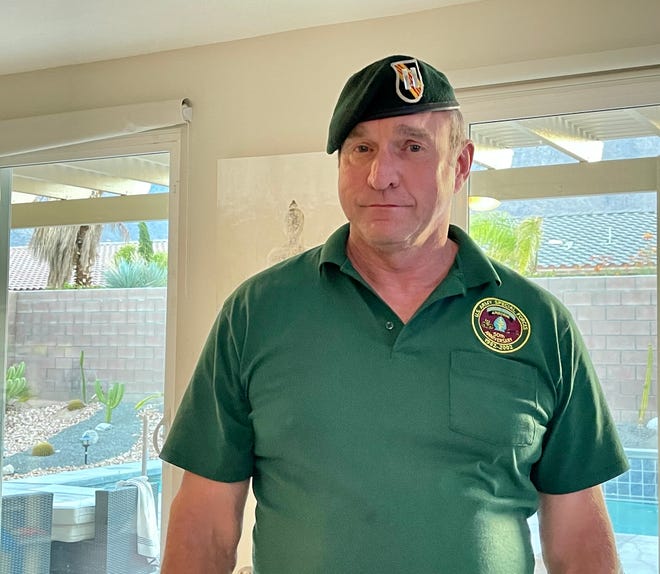
A Palm Springs Green Beret is trying to save his friends from the Taliban
[ad_1]
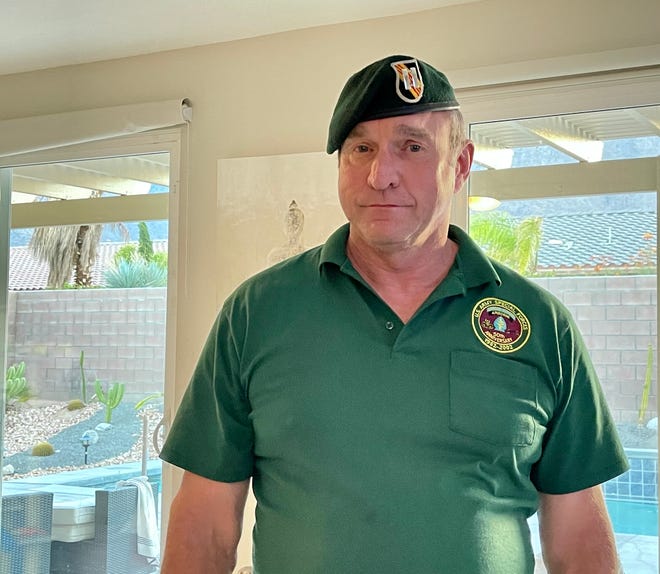
Palm Springs resident Scott Grasser has been busy writing letters that he hopes will save lives.
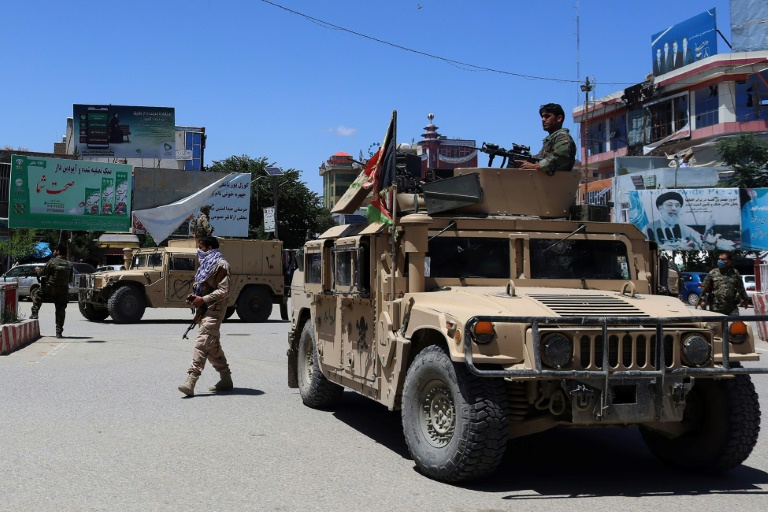
As the U.S. military prepares to end its 20-year mission in Afghanistan on Aug. 31, the Taliban is moving quickly to regain the power it lost when U.S.-led forces invaded in 2001. The Islamic fundamentalist group is killing civilians, assassinating detractors and overrunning major cities.
Among the targets are Afghans who worked for the U.S. military or U.S.-based companies operating in Afghanistan. This situation is extremely worrisome for Grasser, 59, a retired U.S. Army Special Forces captain and longtime country security director for Contrack International — now known as Contrack Watts — a global construction company doing work in Afghanistan.
He fears for the safety of the men who worked for him — and their families — and is doing all he can to try to help bring them to the U.S. through a Special Immigrant Visa – Afghanistan (SIV-A) program.
Afghan nationals can apply for this visa if they were employed by or on behalf of the U.S. government in Afghanistan for a minimum of two years between Oct. 7, 2001, and Dec. 31, 2022. Applicants must also have experienced or be experiencing an ongoing serious threat as a consequence of their employment.
Documents required for this application include ID cards, a threat letter (explaining the reason why you want to leave the country), a human resources letter verifying employment and a letter of recommendation from the U.S. citizen who was the employee’s direct supervisor.
Since 2020, Grasser has written 14 such letters, which must be submitted under strict guidelines.
“They can only be from my personal supervision,” Grasser said. “I must know them. All employees, no matter what the job, are treated equal. Some were clerks, guards, drivers … but I had a 450-man department. Per law, they all get the same letter. We use contract numbers from the Department of Justice to identify each employee on their employment contracts, same as in the U.S.”
His efforts have resulted in the issuance of eight visas to date. The process can be excruciatingly slow or can take as little as six months.
He wishes he could have done more. He will continue doing what he can. He said he will not forget these men.
“I was their boss in Afghanistan,” Grasser said. “My father taught me to be a moral man. And Green Berets do not forget their allies. They saved my life. I’m just doing what my father taught me. Help them.”

Grasser, who served in the U.S. Army from 1982 to 1990, began a career in the private security industry after leaving the military. He worked in Algeria as a site security manager on the GME natural gas pipeline that runs from Algeria to Europe, worked as a private investigator in San Francisco from 1997 to 2001 and served as site security manager in Najaf, Iraq, in 2003 and 2004.
In 2004, Grasser was hired as country security director, Afghanistan, for Contrack International.
“I was hired as the country’s security director on nearly $2 billion worth of United States Army Corps of Engineer money, to build Afghan National Army bases and runways,” he said. “If you land a plane in Afghanistan, more than likely, we built the runway.”
All of that construction required extensive security operations. Convoys carrying building materials, supplies and corporate business leaders from the U.S. also needed protection.

Afghans fill dangerous jobs to support U.S.-backed projects
Nasir Rashha, 40, was among the men Grasser tapped to be on his security team. Rashha and his cousin Abouzar Raffee, 32, were visiting Grasser’s home in Palm Springs on a recent evening. The men and four other cousins were in town visiting from Sacramento.
All are in the country under the Special Immigrant Visa program. Rashha was able to leave with his wife and four children in April 2015. His cousins have come to the U.S. on visas in the past three or four years.
“Every year, I come down to see Scott because I like his character,” said Rashha. “He is the only guy from the company; every day he is thinking how to get the Afghan people out of this situation.”

Grasser hired Rashha in 2006, and the men have remained good friends ever since.
“He turned out to be gold,” Grasser said. “He was the right guy for the job.”
Rashha worked for Grasser for 10 years, starting as a driver and rapidly moving into jobs of higher security responsibilities.

“I was a fire controller, security controller, handling the convoys — escorting convoys from different projects in Afghanistan,” he said.
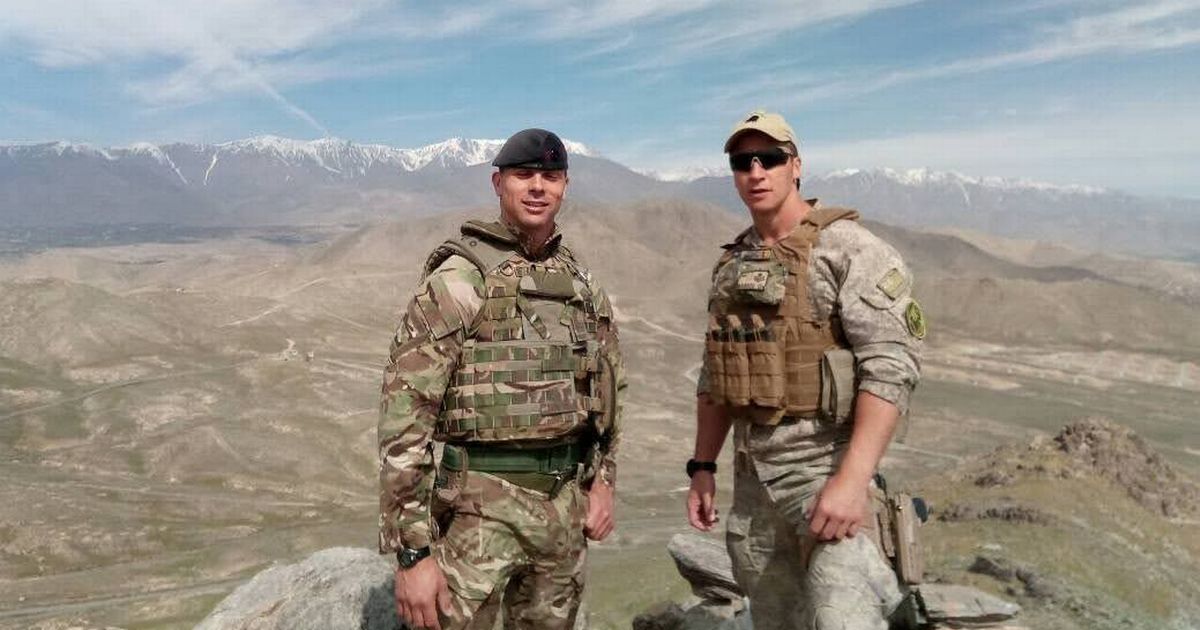
All the time being aware an attack could come at any time. The security teams were armed and wore protective military gear.
Rashha was also responsible for taking care of the VIPs and CEOs from companies doing business in Afghanistan.
“Making sure he has good security, take him to the airport, all the way to the army airport and the bases,” Rashha said. “Also, I was controlling the security…
[ad_2]
Source link



Leave a Reply
Want to join the discussion?Feel free to contribute!